Last updated November 21, 2026
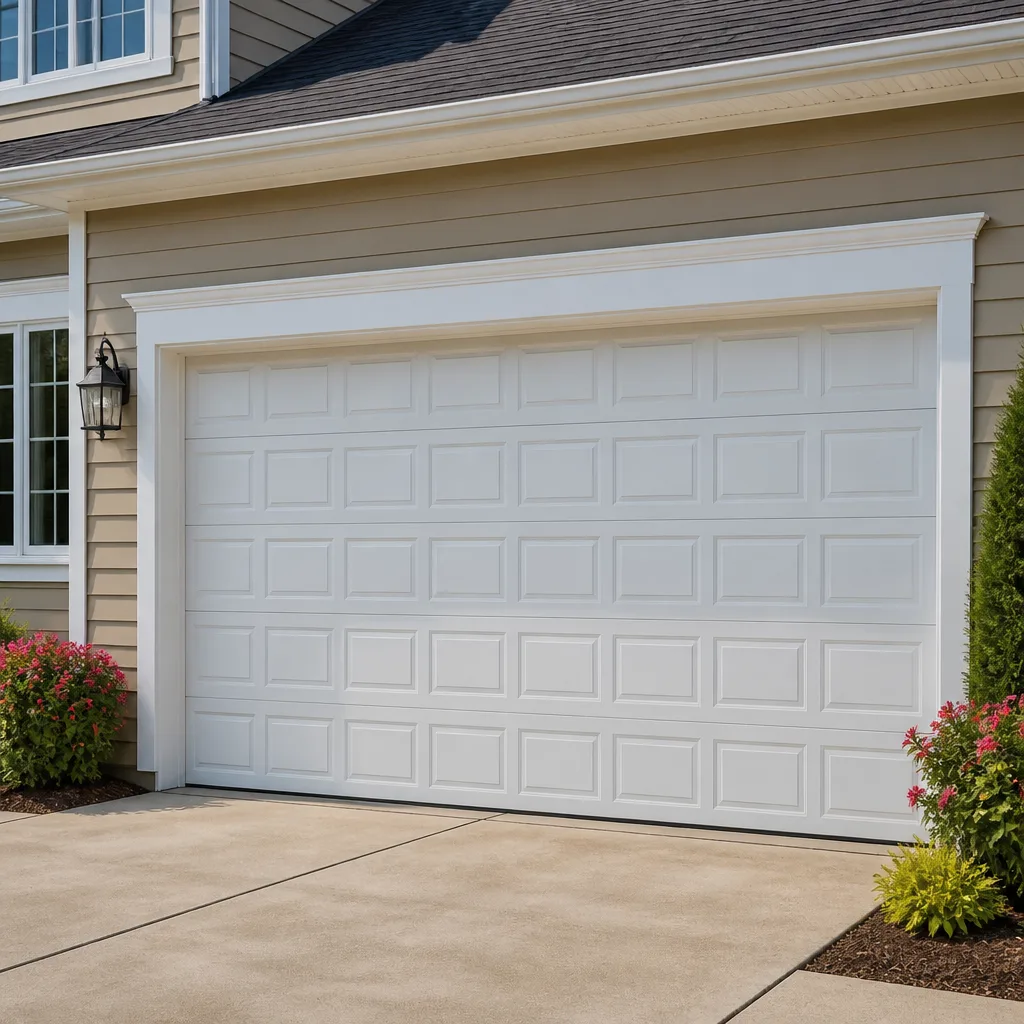 Raised-panel steel
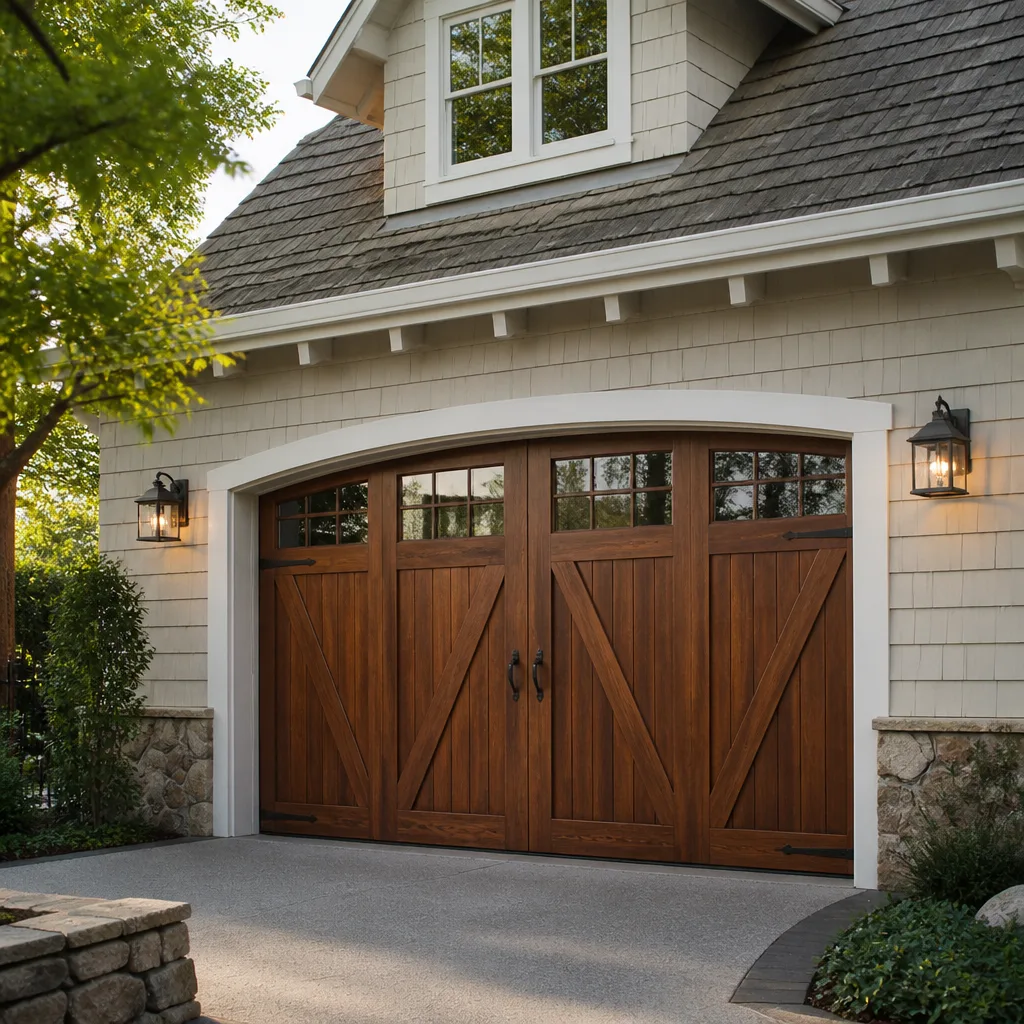 Carriage house
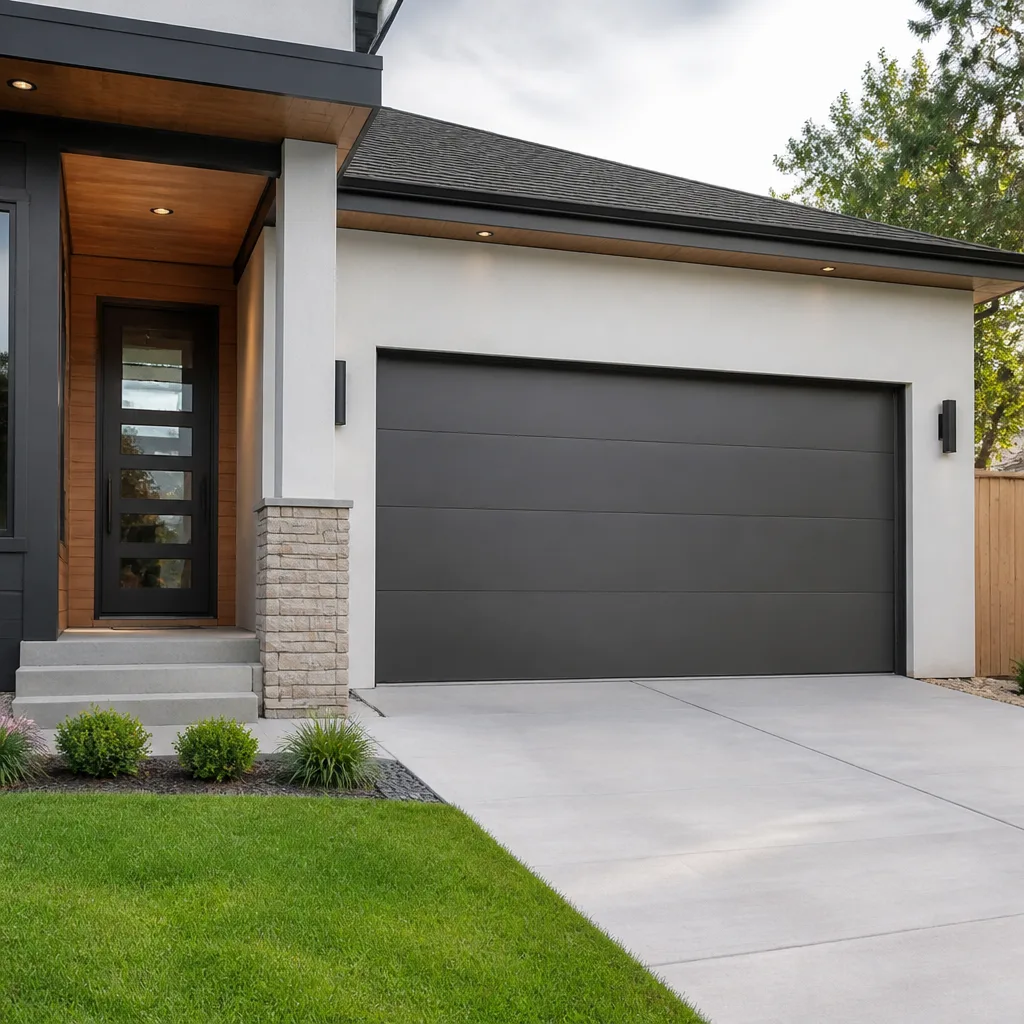 Modern flush
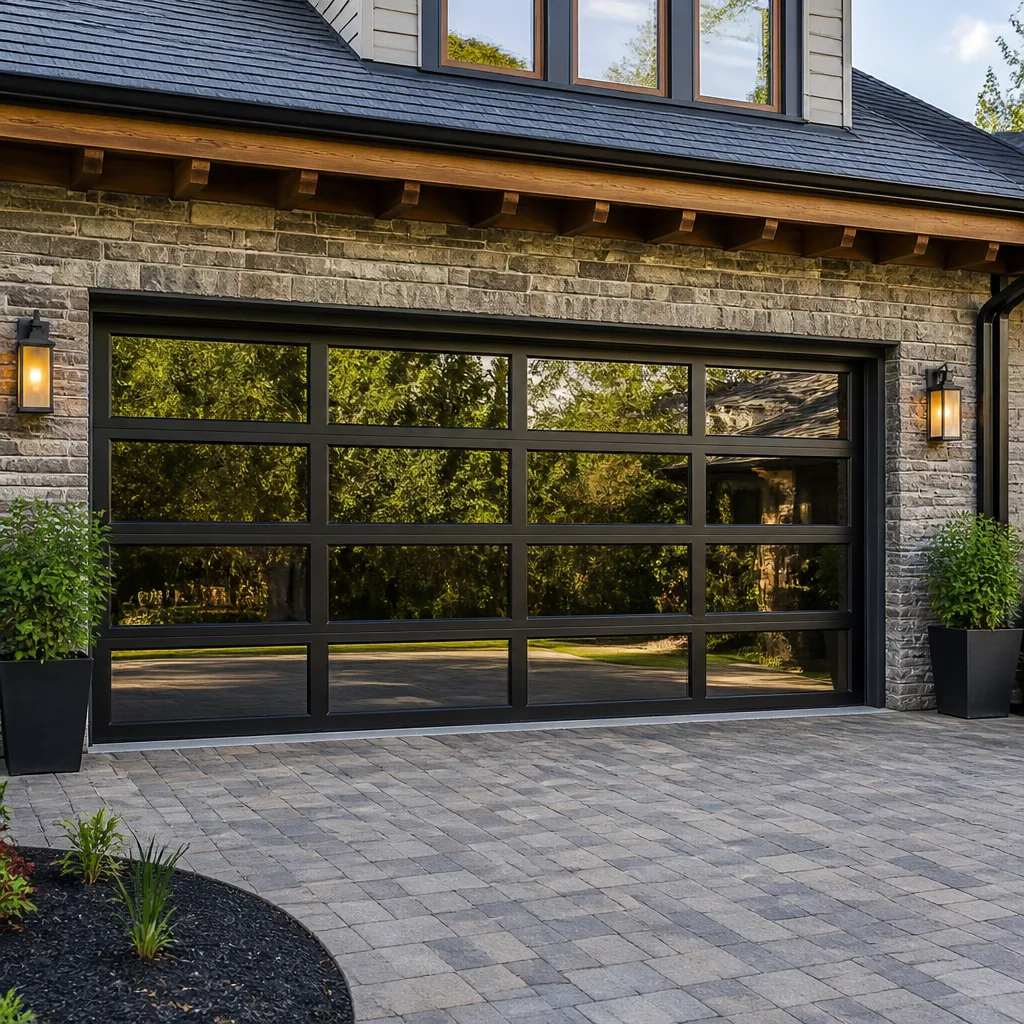 Full-view glass
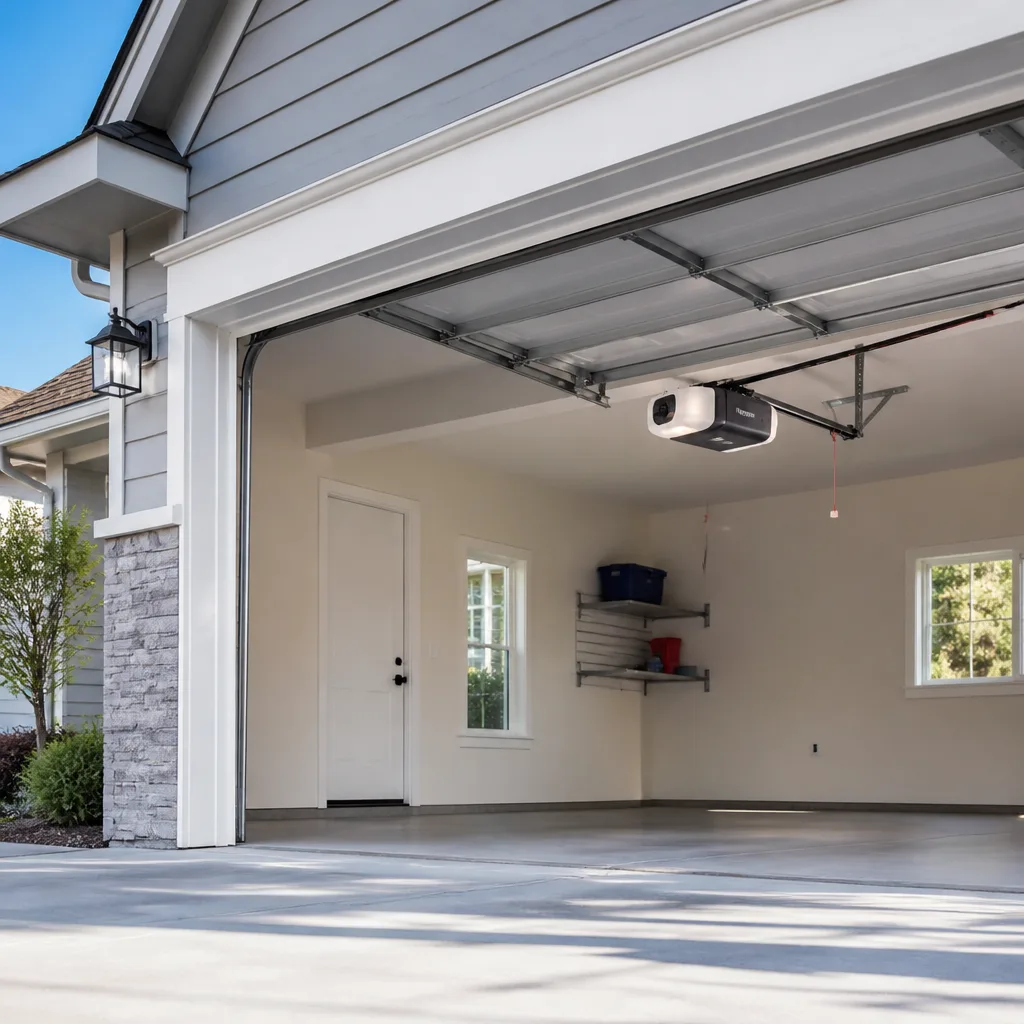 LiftMaster openers
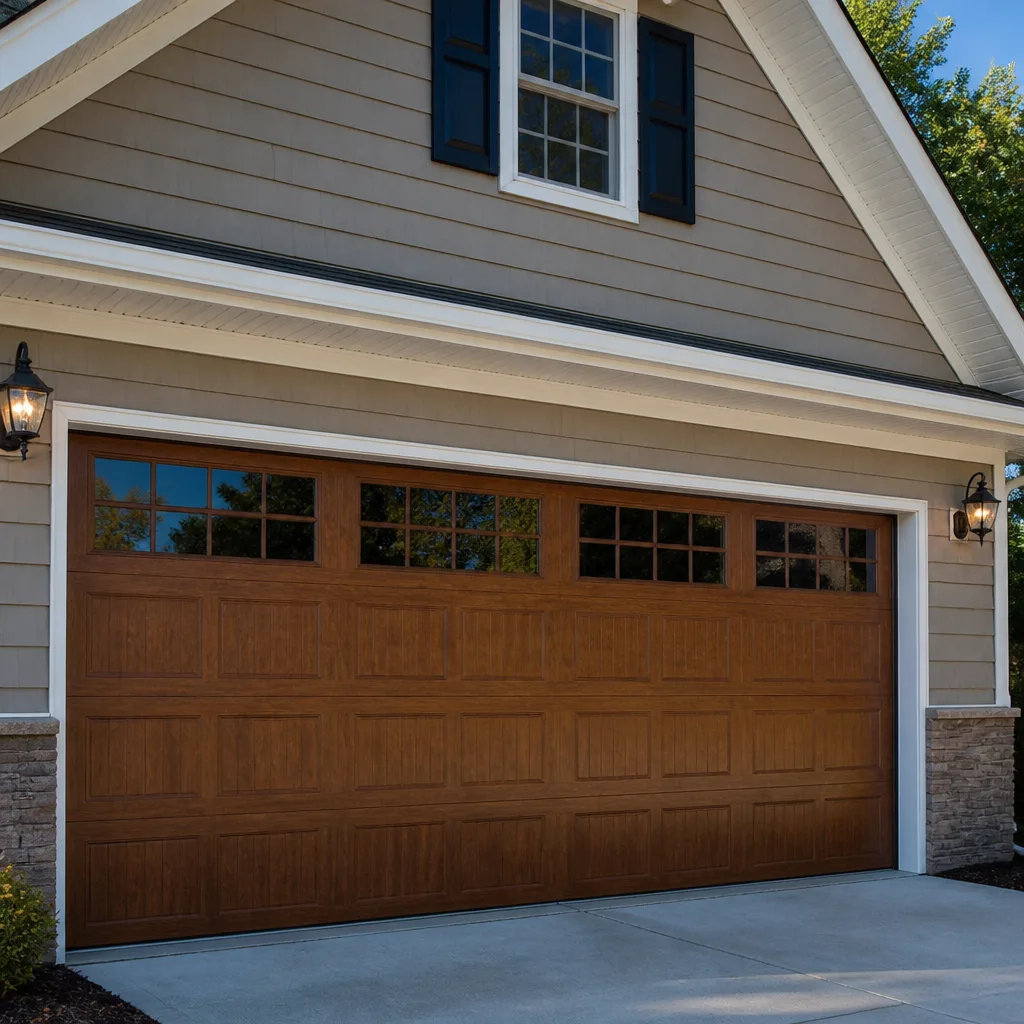 Chamberlain openers
Full 25-point door and opener safety check with every visit - springs, cables, rollers, tracks, and your LiftMaster or Chamberlain opener included
You get a price before we start. It does not change when the pro arrives.
Get your free estimateDIY vs Professional Garage Door: The Charlestown Homeowner’s Decision Guide
Most garage door advice online treats DIY as a test of character. It isn’t. It’s a risk-calibration exercise, and the right answer changes depending on which part of the door you’re touching. Swapping a remote battery is a five-minute job. Touching a torsion spring is a different category of decision entirely, because a spring under load carries enough stored torque to break a bone if a tool slips. This guide draws the line precisely for Charlestown homeowners, so you know exactly what you can safely handle on your own, what’s borderline, and where the smart move is to hand it to someone with the right tools and training.
Quick Answer
You can safely DIY the low-risk parts of garage door maintenance in Charlestown: lubrication, safety sensor alignment, remote and keypad programming, and visual inspection. You should not DIY torsion springs, extension springs, cables, structural track work, or anything involving the opener’s electrical wiring, because these components store or deliver the kind of energy that causes serious injuries even to careful people. Panel dents, bottom seal swaps, and weatherstripping sit in the middle: doable for a confident DIYer, but easy to get wrong on older or non-standard doors.
Styles & brands we work with
- Raised-panel steel
- Carriage house
- Modern flush
- Full-view glass
- LiftMaster openers
- Chamberlain openers
Table of Contents
- The Three Tiers of Garage Door Work
- Tier 1: What You Can Safely Do Yourself
- Tier 2: The Conditional DIY Zone
- Tier 3: Professional-Only Work
- What “Voiding the Warranty” Actually Means
- Charlestown Site Factors That Change the Math
- Real Cost Comparison: DIY vs Professional
- The Hybrid Approach: DIY the Safe Parts, Delegate the Rest
The Three Tiers of Garage Door Work
Our technicians have up to 12 years of experience, and in that time we’ve noticed a pattern: homeowners who get hurt or double their repair bill usually didn’t misjudge their own skill. They misjudged which tier a job belonged to. Think of garage door work as three concentric circles.
Tier 1 is safe DIY. Low energy, low consequence, low cost if you get it wrong. Lubrication, sensor alignment, remote programming, and visual inspections live here.
Tier 2 is conditional DIY. These tasks are physically doable for a careful homeowner, but they hinge on the age of the door, the condition of the hardware, and whether you have a second person and adequate space. Panel dents, bottom seal swaps, and weatherstripping fall into this band.
Tier 3 is professional-only. Springs, cables, structural track work, and opener electrical wiring. These involve stored energy or live current. No amount of YouTube research changes the physics.
The most expensive mistakes we see come from crossing tiers without realizing it. A homeowner won’t try to swap a torsion spring, but they’ll start a track adjustment that quietly bends a roller and warps a hinge over a few weeks, and by the time they call us, the repair covers the whole assembly.
Tier 1: What You Can Safely Do Yourself
These tasks are genuinely low-risk when done carefully, and they handle the majority of “my door is acting weird” situations in Charlestown.
- Lubricate the moving parts. Hinges, rollers, and the opener’s chain or screw drive need lubrication roughly twice a year. Use a garage-door-specific spray, not WD-40 or cooking oil. Wipe off excess so dust doesn’t turn into a grinding paste.
- Align the safety sensors. The two sensors near the floor should have steady indicator lights. If one is blinking, the beam is misaligned or blocked. Nudge the bracket, clean the lens, and clear any cobwebs or leaves between them.
- Program a new remote. On a Chamberlain or Genie opener, you’ll pair a remote by pressing the learn button or following the manual. This is safe, straightforward work.
- Test the auto-reverse. Place a piece of wood flat under the door’s path and close it. The door should reverse on contact. If it doesn’t, stop using the door and get it checked – this is a safety function, not a preference.
- Check balance by hand. Disconnect the opener and lift the door halfway. It should hold position without sagging. If it drops, springs or cables need attention, which brings us to Tier 3.
- Visual inspection. Look for frayed cables, bent tracks, worn rollers, rusted hinges, and gaps at the bottom seal. You’re not fixing anything here – you’re catching problems before they get expensive.
None of these tasks require climbing on the door or touching a loaded component. That’s what makes them safe.
Tier 2: The Conditional DIY Zone
These are the tasks where the honest answer is “it depends.” Let’s look at what pushes a job from doable to “call us.”
Panel Dents and Cosmetic Damage
A small dent in a steel door panel can sometimes be pressed out from behind with a suction cup or a soft mallet. Whether that’s worth attempting depends on the door’s material and age. On older Clopay or Amarr steel doors, the paint around a dent often cracks when you press it out, and a cracked edge invites rust down the road. On insulated doors, the panel’s foam core can be crushed by aggressive pushing. If the dent is deep, on a seam, or you can’t easily reach behind it, cosmetic repair is best left to a pro who can match the panel color and gauge.
Bottom Seal and Weatherstripping
Replacing a bottom seal is one of the most popular DIY jobs, and it’s genuinely approachable. The caveats are real, though. You need the door fully open and safely locked, the correct replacement profile, and the ability to thread the new seal evenly along the whole track. If the door was installed by the previous owner with a non-standard profile, you’ll spend an hour at the hardware store and still come home with the wrong part. We stock common seal profiles for that reason – a pro can usually identify and fit the right one first try.
Opener Belt or Chain Replacement
This sits right on the line. Some homeowners successfully replace a belt on a Chamberlain opener with the manual in hand. But once you’re removing the opener from its rails, you’re working near a mounted assembly that can fall, and you may need to re-tension the drive after. If your opener is older or already noisy, belt replacement is often the moment an aging unit fails entirely.
Rule of thumb: if the job requires you to remove anything that holds the door or the opener in position, treat it as Tier 3.
Tier 3: Professional-Only Work
This is where the risk calculus stops being a debate. These components carry stored energy, high tension, or live electrical current, and a moment’s slip causes injuries that no DIY savings can offset.
- Torsion springs. A torsion spring is wound to somewhere around 150 foot-pounds of torque in a typical residential door. That energy is what lifts the door and what can snap back on a hand or face if a winding bar slips. Never attempt to replace, adjust, or unwind a torsion spring. Our technicians treat spring repair as a dedicated, named service for exactly this reason – it’s the part that fails most often and the part that injures most people.
- Extension springs. Older doors use extension springs on the sides of the track. These are under tension too, and a snapped spring can whip a cable across the garage. Replacements should include the correct safety cable, which is not always present on older installations.
- Cables. Cables carry the door’s full weight and are braided under tension. Touching a cable while it’s loaded is one of the classic ways people lose fingers. This is not a DIY zone.
- Structural track work. Straightening a bent track looks simple because it’s just metal. But the track must be aligned within a fraction of an inch along its full length, or the door will bind, wear rollers out, and eventually come off.
- Opener electrical wiring. Anything involving the opener’s high-voltage supply, new circuits, or wall switch wiring crosses into licensed electrician territory in Massachusetts. Even the low-voltage side can be damaged if you’re not sure which terminal is which.
- Replacing a broken spring on a single-panel wood door. Heavy wood doors amplify every torque issue, and the panel itself can crack under the wrong load. Our technicians have seen this go badly enough times to always treat it as Tier 3.
If a spring or cable has visibly failed on your door, don’t run the opener. Leave the door closed, disconnect the opener if you can reach the release cord safely, and call a professional. We can work with your insurer if a failure caused collateral damage, but the first priority is getting the door into a safe state.
What “Voiding the Warranty” Actually Means
The phrase gets thrown around a lot, and it’s often used as a scare tactic when it shouldn’t be. Here’s what actually matters on the major brands we service – LiftMaster, Chamberlain, Genie, Clopay, Amarr, Wayne Dalton, Craftsman, and Raynor.
Manufacturer warranties cover defects in materials and workmanship. They don’t cover damage caused by improper installation, unauthorized modification, or use outside the specified parameters. In practice, that means:
- Running a door with a broken spring “just to see if it works” can void the opener warranty. The opener strains to lift a door it isn’t designed to lift, and the motor or drive can fail. This is one of the most common warranty issues we see on Chamberlain and Genie units. The opener isn’t at fault, but the manufacturer can tell from the failure pattern what happened.
- Lubricating with the wrong product typically doesn’t void a warranty, but it can void a specific claim. If your opener fails and the technician finds cooking oil gummed up the chain, that’s a maintenance issue, not a defect.
- Programming a new remote or keypad doesn’t void anything. This is normal user activity, and every manufacturer expects it.
- Replacing a bottom seal doesn’t void anything unless you damage the door panel doing it.
- Attempting a spring replacement and damaging the door does void the door’s warranty on the affected components. It’s not the manufacturer being punitive; it’s that a mis-wound spring can bend a center bearing plate that then warps the whole assembly.
- Adding a smart-home module to a newer opener is usually fine, but check the manual. Some manufacturers require a specific module to preserve the warranty, and aftermarket brands can cause pairing problems.
If you’re ever unsure, ask. We work on your brand often enough to know the specific terms, and a quick phone call can save you from making a warranty mistake on a $600 opener.
Charlestown Site Factors That Change the Math
Charlestown’s housing stock is not a generic suburban garage. The neighborhood’s mix of older row houses, tightly packed condos, and narrow lots changes which garage door work is realistically doable on a Saturday afternoon and which isn’t.
Low headroom. A lot of Charlestown garages were retrofitted into spaces that were never designed for modern doors. Low headroom means the springs sit closer to the door header, the track dips lower, and you have less room to safely work around a loaded spring. A job that looks approachable on a video shot in a wide suburban garage can be genuinely cramped here.
Shared walls in condos. Many Charlestown buildings have attached garages sharing a wall with a neighbor’s unit. A spring winding slip that sends a tool flying is one risk; the risk of damaging a shared wall or striking a common electrical run is another. Track work in these buildings also has less tolerance, because the door can’t shift against the shared wall.
No staging area for panels. Replacing a door panel requires laying the old panel flat and having the new one ready to install. In a narrow Charlestown driveway or a garage tucked behind a row house, there’s often nowhere to stage a 9-foot-wide panel without blocking the street or a neighbor’s access. That’s one reason full panel replacement is better coordinated as a scheduled job.
Alley access and tight turns. Some Charlestown garages are reached through narrow alleys. A pro needs to know that up front so they can bring the right vehicle and plan the door delivery. A homeowner ordering a door online hasn’t factored that in until the freight truck can’t make the turn.
Historic building constraints. Charlestown has a meaningful stock of older homes, and some garages sit within historic-district boundaries where exterior changes need review. Permits and design review aren’t garage door mechanics, but they affect whether a planned replacement can proceed as scheduled. Our advice: confirm the rule with your city’s building department before ordering a custom door, because custom orders aren’t easily returned.
None of this argues against DIY across the board. It argues that in Charlestown, the space and the neighbors around your door are part of the decision, not an afterthought.
Real Cost Comparison: DIY vs Professional
A fair cost comparison has to include parts, time, tool costs, and the value of a warranty on the labor. Looking only at the parts line is how people under-budget.
Typical Cost Ranges in the Charlestown Market
| Task | DIY Parts Cost | Professional Estimate | Notes |
|---|---|---|---|
| Spring repair (one spring) | $40-$80 in parts | $180-$340 installed | A matched pair is usually replaced together, so expect roughly twice the installed price. Professional only. |
| Bottom seal replacement | $30-$60 | $80-$180 | DIY-viable if you can source the right profile for your door. |
| Sensor alignment / diagnostics | $0 | $60-$120 | Often free with a related repair. |
| Remote or keypad programming | $0-$40 | $50-$100 | Dealership-free; manual or app usually covers it. |
| Opener repair (board, gear, drive) | $50-$150 in parts | $150-$350 | Covers Chamberlain, Genie, LiftMaster, Craftsman units. |
| Cable replacement | Not advisable | $150-$300 | Professional only. Cables under tension. |
| Track realignment | Not advisable | $120-$250 | Professional only. Needs a calibrated eye for the full alignment. |
Prices are typical for the Charlestown market, not fixed quotes. Your written estimate sets the final price, and it’s always done before any work starts.
The Hidden Line Items on DIY
When you add up DIY parts, you usually leave out the following:
- Tool costs. Winding bars, for instance, aren’t something most homeowners own, and improvising with screwdrivers is one of the classic reasons spring work goes wrong.
- Wasted parts. Ordering an incorrect seal or panel is common; returns aren’t always easy.
- Time at your own hourly rate. A sensor alignment takes a pro 15 minutes and a first-timer an hour.
- Repair costs if something goes wrong. A mis-aligned track can wear out $40 in rollers and a $60 hinge set within a month.
- Warranty value. A professional install on a spring or opener usually carries a labor warranty. That’s the answer to the question every homeowner asks: “Will the price change once you see it?” No – the estimate is the price, and if something unexpected shows up, we discuss it with you before touching it.
For simple Tier 1 jobs, DIY wins on cost. For anything that touches a spring, a cable, or the opener’s internals, the professional all-in number is usually the cheaper option once you factor in risk and warranty.
The Hybrid Approach: DIY the Safe Parts, Delegate the Rest
You don’t have to choose sides. The smartest approach for most Charlestown households is a hybrid: handle the maintenance yourself, then bring in a pro for one focused visit that covers everything in Tier 2 and Tier 3 at once. That’s more efficient than doing it piecemeal and often less expensive than a full-service call for each task.
Here’s how we usually structure it:
- You do the Tier 1 prep. Lubricate, clean the sensors, test the balance, and note anything that looks or sounds wrong.
- You take photos. A few photos of the door, the opener label, and the spring assembly help us identify the model, the brand, and the specific issue before the visit.
- We diagnose the whole system. Whether it’s the door, the opener, or the spring, we check the full assembly in one visit. This is how a door-related question and an opener-related question get handled in the same appointment instead of two.
- Your written estimate. One estimate covering the quote. No surprise line items.
- We do the work. Springs, cables, track, electrical, and any parts replacements. You know exactly which tasks were Tier 3 and which were not.
That model fits Charlestown particularly well, because getting a technician out for one consolidated visit is easier than coordinating three separate appointments around narrow alley access and shared driveways. If your door, opener, or spring needs more than a lube, garage door repair is where those diagnostic visits begin.
Common Mistakes to Avoid
- Using WD-40 on hinges and rollers. It’s a solvent, not a lubricant. It strips existing grease and leaves metal dry. Use a garage-door-specific spray instead.
- Trying to fix a torsion spring with improvised tools. Screwdrivers, pliers, and vice grips are not winding bars. A slipped torsion spring can break a wrist. Give this one to a pro without hesitation.
- Skipping the balance test after any adjustment. A door that sags or drops when half-open is telling you the springs need attention, and it’s also a sign that the opener is about to fail. Test balance any time you touch anything near the tracks.
- Assuming all springs are the same. Torsion vs extension, left vs right winding, and insulation of the door itself all affect the correct spring. Ordering the wrong spring is as bad as not repairing the door – it can’t safely lift what the door weighs.
- Blocking the sensor path with stored items. In a small Charlestown garage, stacking boxes under the door is a common way to accidentally disable the auto-reverse. Clear the floor path before you close the door.
- Propping a door open with a broomstick as a temporary fix. It works once, then fails. The door is a safety system – do not rely on a brace that isn’t designed for it.
- Forgetting to note your opener model. “The opener’s broken” tells us nothing. Snap a photo of the label on the motor housing; Chamberlain, Genie, LiftMaster, and Craftsman models all differ in ways that affect which part we need to stock.
See the difference
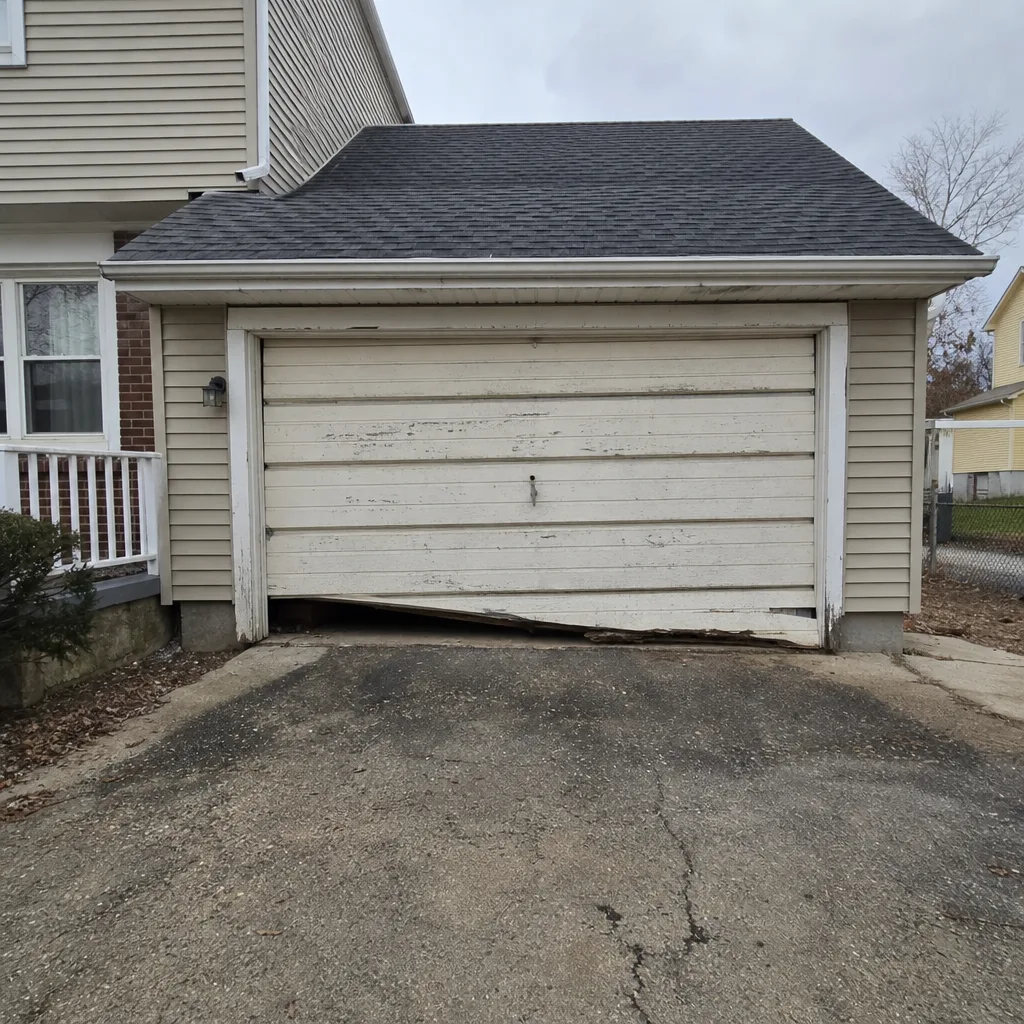 Before
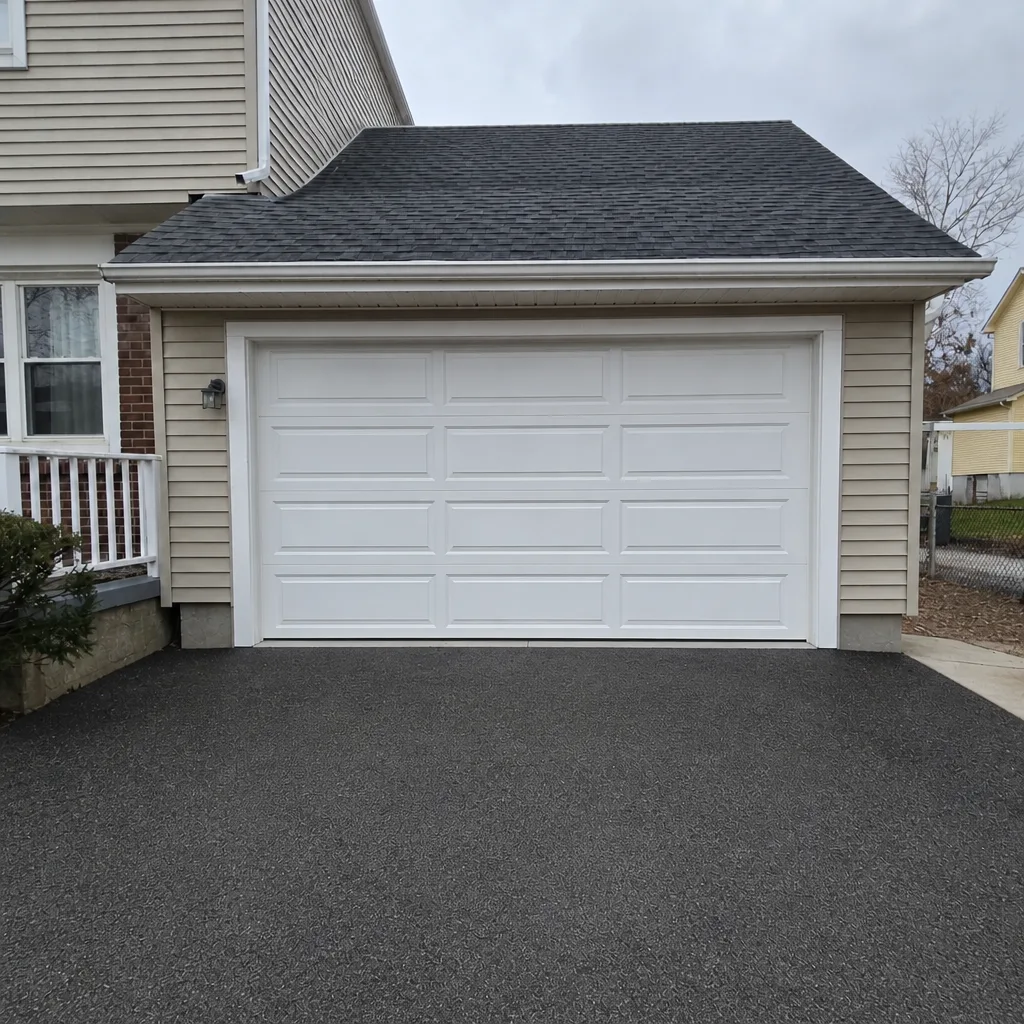 After
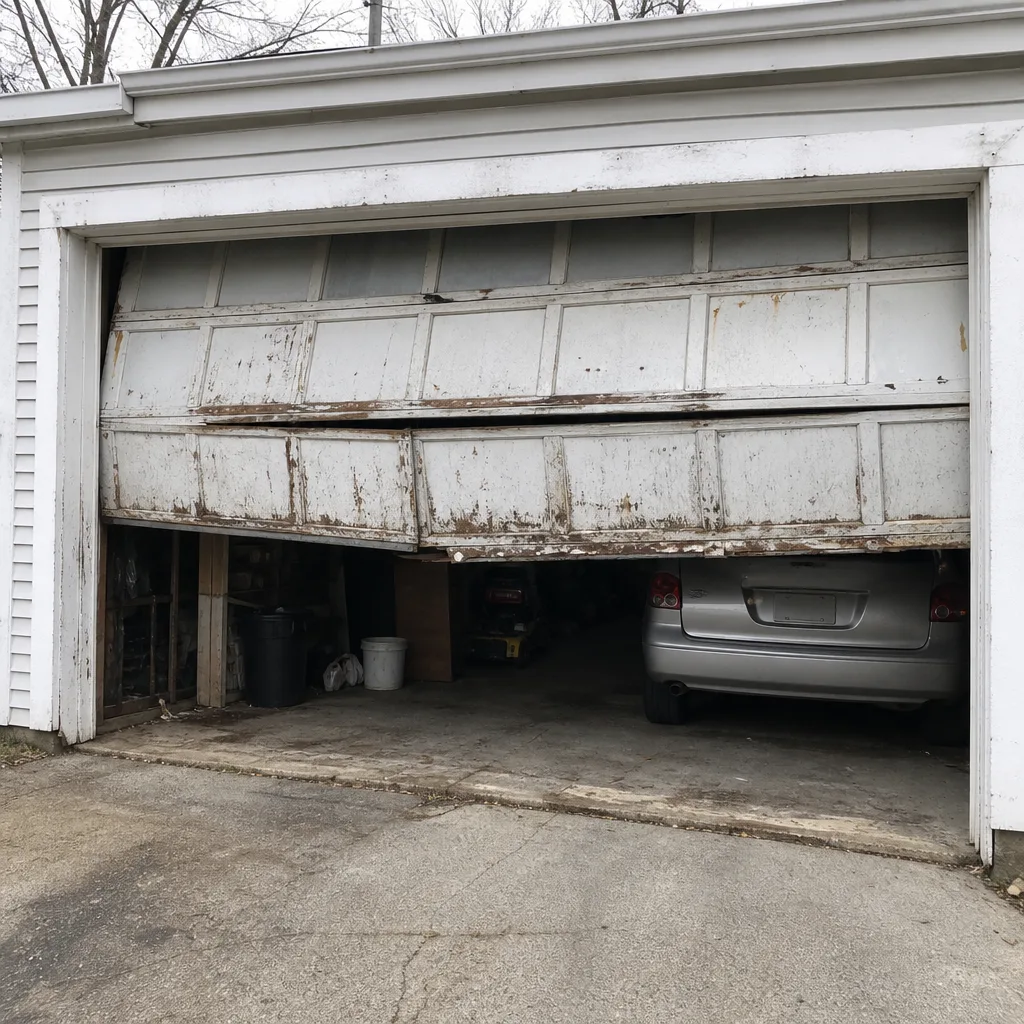 Before
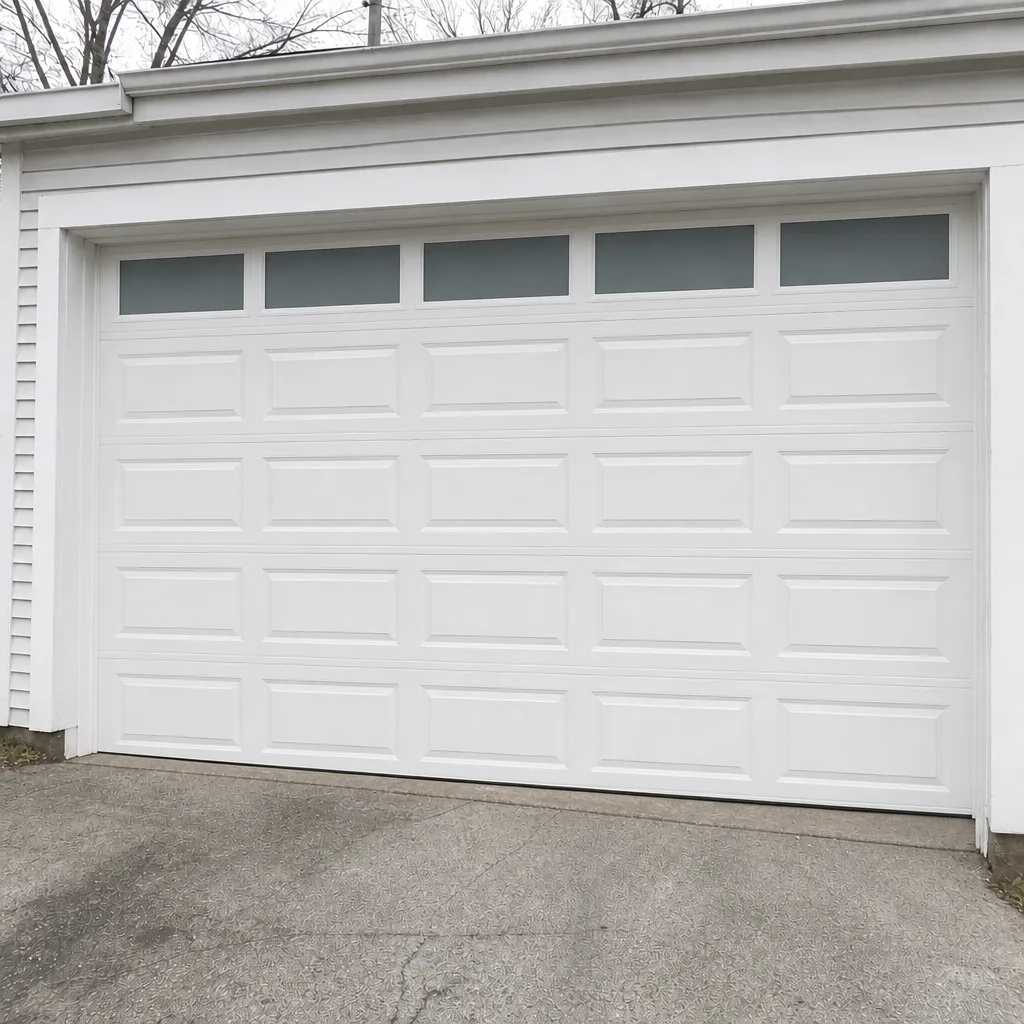 After
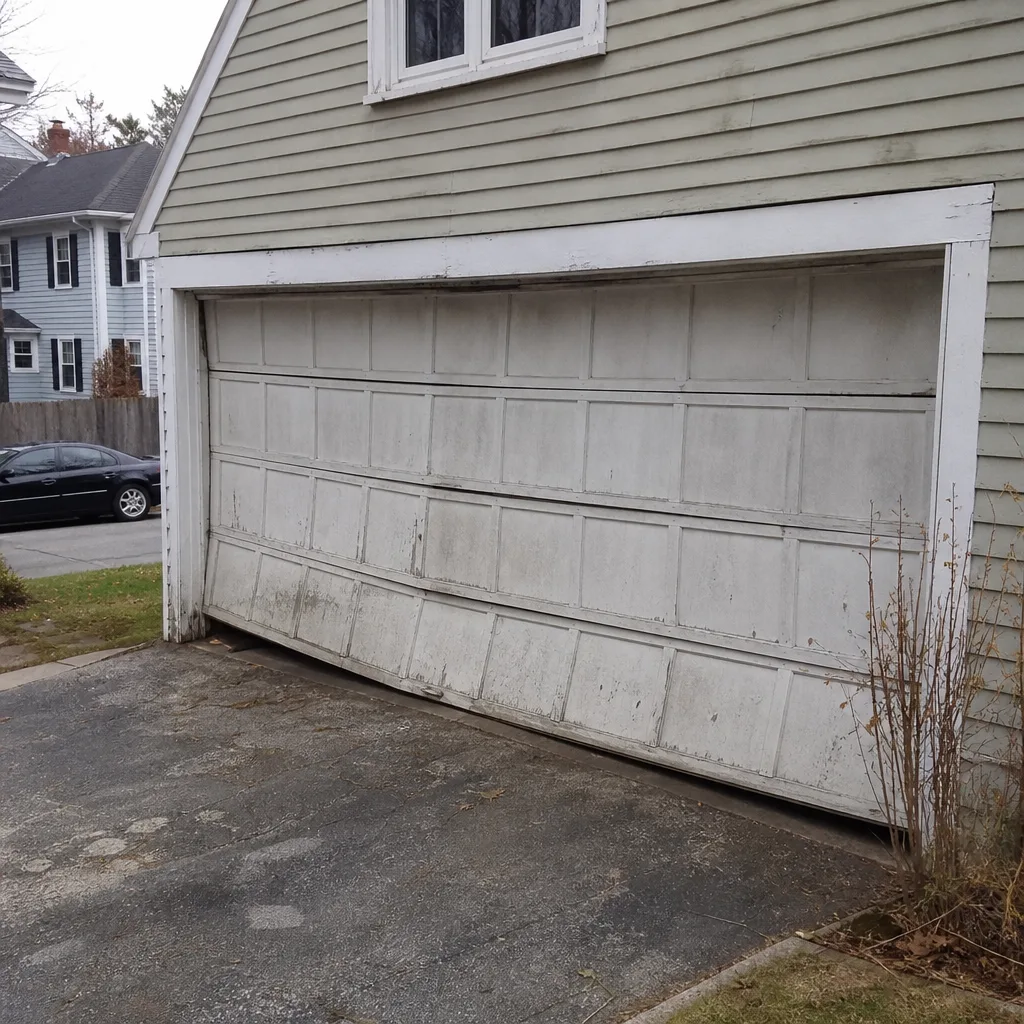 Before
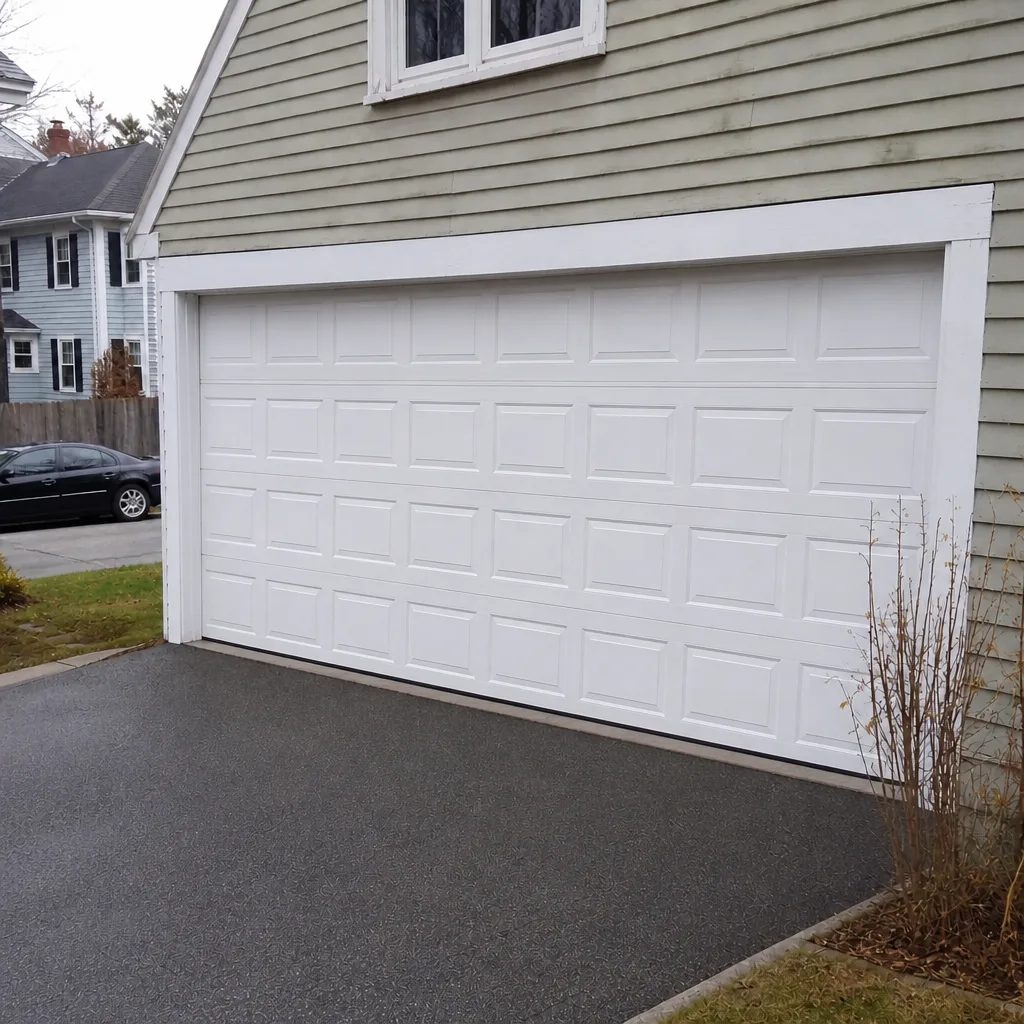 After
When to Call a Professional
Call us when anything in Tier 3 is involved: springs, cables, track realignment, or the opener’s wiring. Also call if the door won’t balance, if either cable is visibly frayed, if the opener strains or reverses without cause, or if the auto-reverse test fails – those are all safety signals. If you hear a loud bang from the garage, expect a broken spring and do not run the opener. If your door is a non-standard size, older wood, or installed in a Charlestown space with tight headroom or a shared wall, err toward a professional visit for anything beyond lubrication. Charlestown Garage Door Repair offers free estimates in Charlestown – call (866) 401-6449.
Frequently Asked Questions
No. Torsion springs are wound to around 150 foot-pounds of torque and a slip can cause serious injury. Extension springs are under tension too and require correct safety cables. Spring repair is the single highest-risk job on a garage door and belongs with a trained technician who has the right winding bars, the correct spring, and a warranty on the labor. Call (866) 401-6449 for an exact quote – estimates are free.
Typical spring repair in the Charlestown market runs $180-$340 per spring installed. A matched pair is usually replaced together, so expect roughly twice the installed price for both. Pricing is quoted and agreed before any work starts, and your written estimate sets the final price. Call (866) 401-6449 for an exact quote – estimates are free.
Only if the DIY work exceeds what the manufacturer considers normal user activity. Programming a remote, replacing a bottom seal, or lubricating components typically doesn’t void a warranty. Running the door with a broken spring, modifying the opener’s internals, or using non-approved add-on modules can affect coverage. If you’re not sure, call us before you proceed – we work on Chamberlain, Genie, LiftMaster, Craftsman, and other major brands often enough to know the terms.
For repair calls in Charlestown, we can often get a technician out the same day because we run fast dispatch from 7am to 7pm. Installation, replacement, and new-door work is measured and scheduled rather than same-day, since the door has to be ordered to your opening. For any urgent repair – a snapped spring, a door off its track – call (866) 401-6449 and we’ll book the earliest slot we can. Note that we’re closed on Saturday.
DIY-viable tasks involve no stored energy or live current: lubrication, sensor alignment, remote programming, visual inspection, and often a bottom seal swap. Professional-only tasks include torsion springs, extension springs, cables, structural track realignment, opener electrical wiring, and anything requiring the door or opener to be removed from position. The line is clear: if a component stores energy or carries current, hand it to a pro.
No. We quote and agree to the price before any work starts. If the on-site diagnosis turns up something different from what the phone call suggested, we tell you before touching anything, give you the adjusted estimate, and wait for your approval. The written estimate is the number you pay. Call (866) 401-6449 to book an estimate.
The Bottom Line
DIY and professional garage door work aren’t in competition. The two categories divide cleanly. Lubrication, sensor alignment, remote programming, and visual checks are yours to own, and they stay useful for years. Springs, cables, track work, and opener electrical are professional-only work, full stop, because the physics of stored energy doesn’t negotiate. In Charlestown specifically, low headroom, shared walls, historic-district questions, and narrow alley access push a few borderline tasks further toward the professional column than they would in a suburban garage. If you own the door, become fluent in all three brands on your opener – Chamberlain, Genie, LiftMaster, Craftsman – and know the door’s brand – Clopay, Amarr, Wayne Dalton, Raynor. That fluency makes every future call easier. For the parts you shouldn’t touch, we handle the full system in one visit, whether it’s the door, the opener, or the spring.
Charlestown Garage Door Repair works on repair, opener repair, spring repair, parts replacement, and new door installation across the widest range of major brands, so you don’t need a second call for a second brand. We can also work with your insurer if a component failure caused collateral damage. For a free estimate, call (866) 401-6449. Our technicians have up to 12 years of experience, and our written price is agreed before any work begins.
Ready to stop guessing which jobs are safe to handle and which aren’t? Call Charlestown Garage Door Repair at (866) 401-6449 for a free estimate. Whether you need garage door opener repair for a Chamberlain or Genie unit, a full garage door installation for a Clopay or Amarr door, or just a spring checked by someone who handles them daily, one call covers it. Charlestown Garage Door Repair is here when you’re ready.
Written by the team at Charlestown Garage Door Repair.