Last updated November 21, 2026
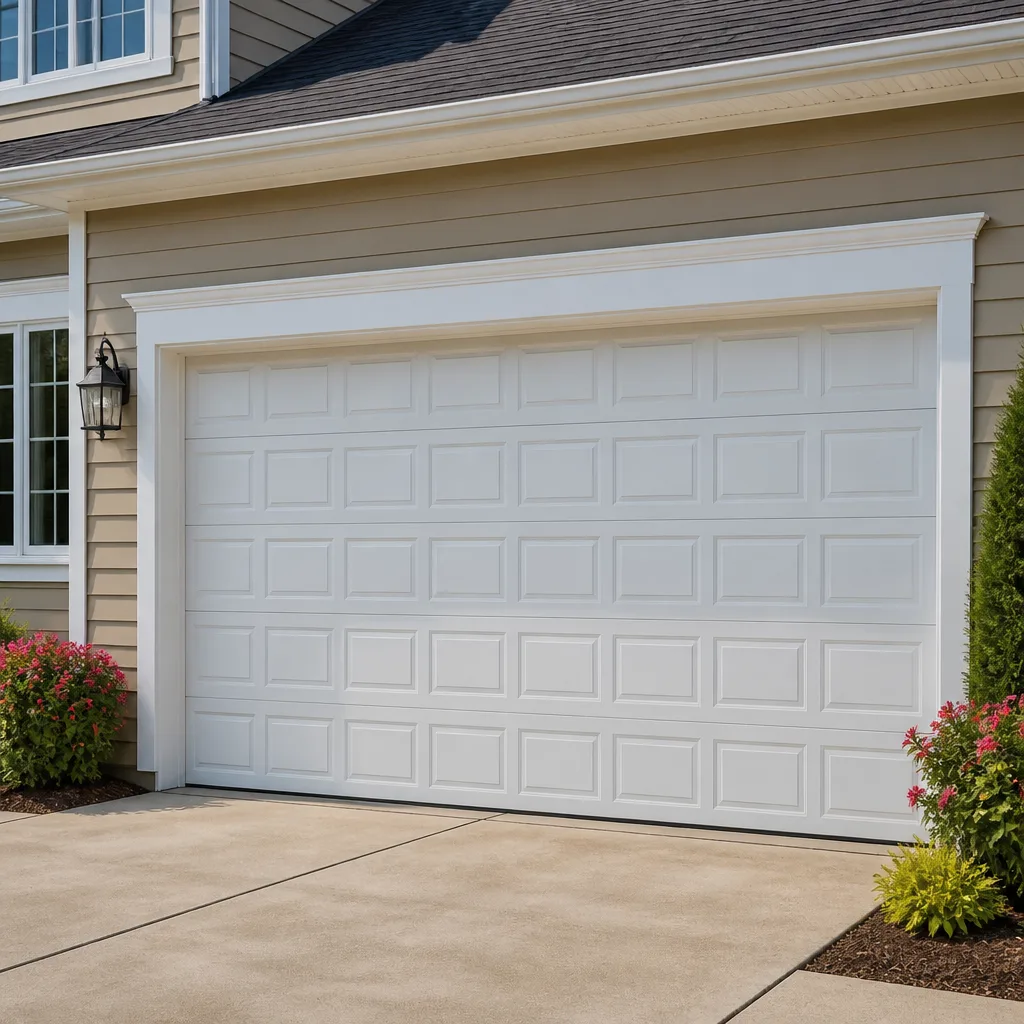 Raised-panel steel
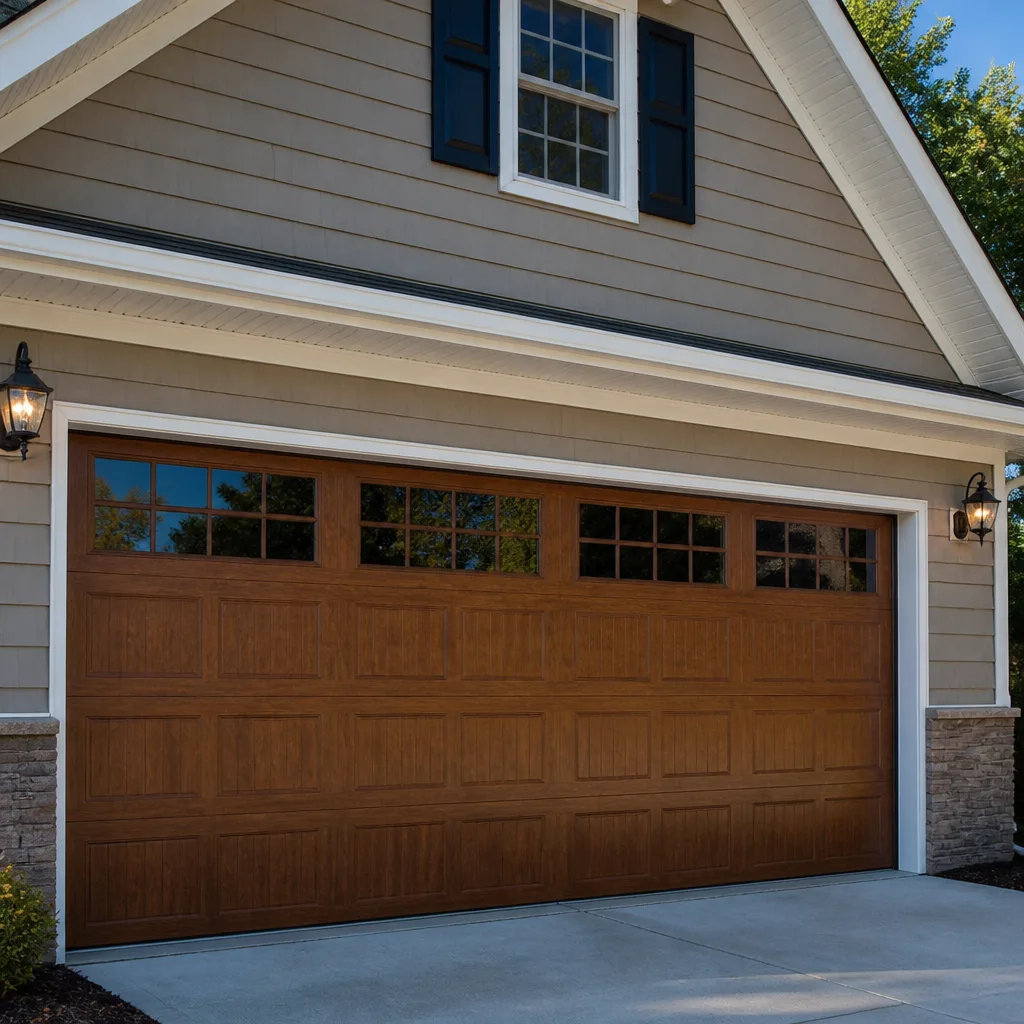
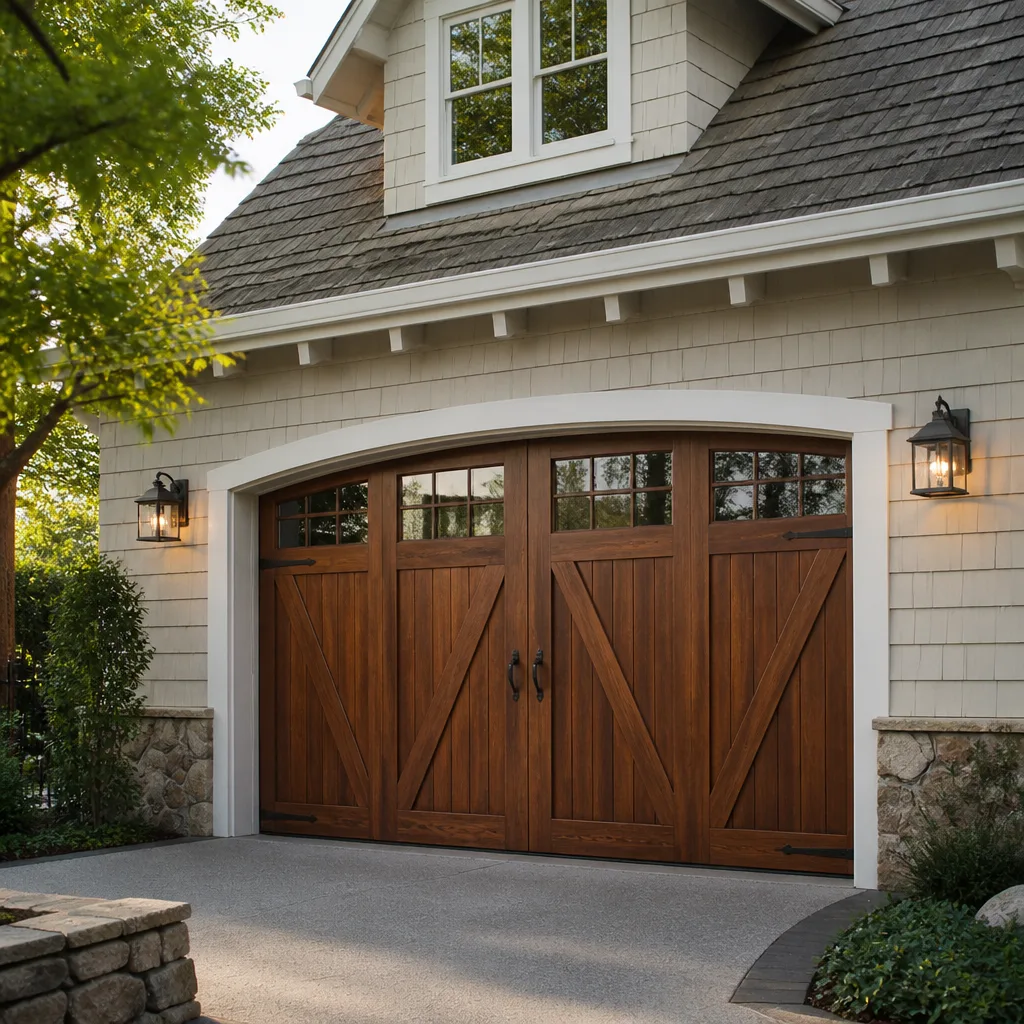 Carriage house
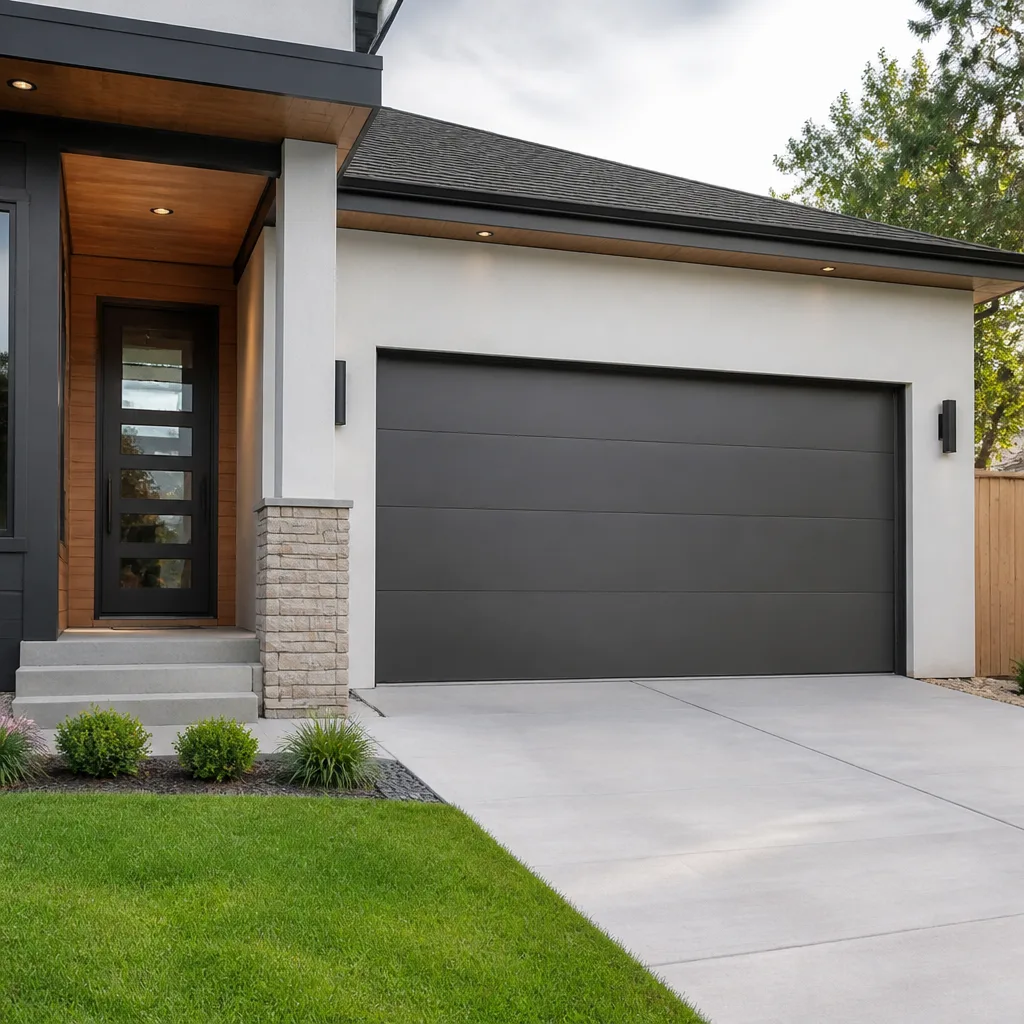 Modern flush
 Full-view glass
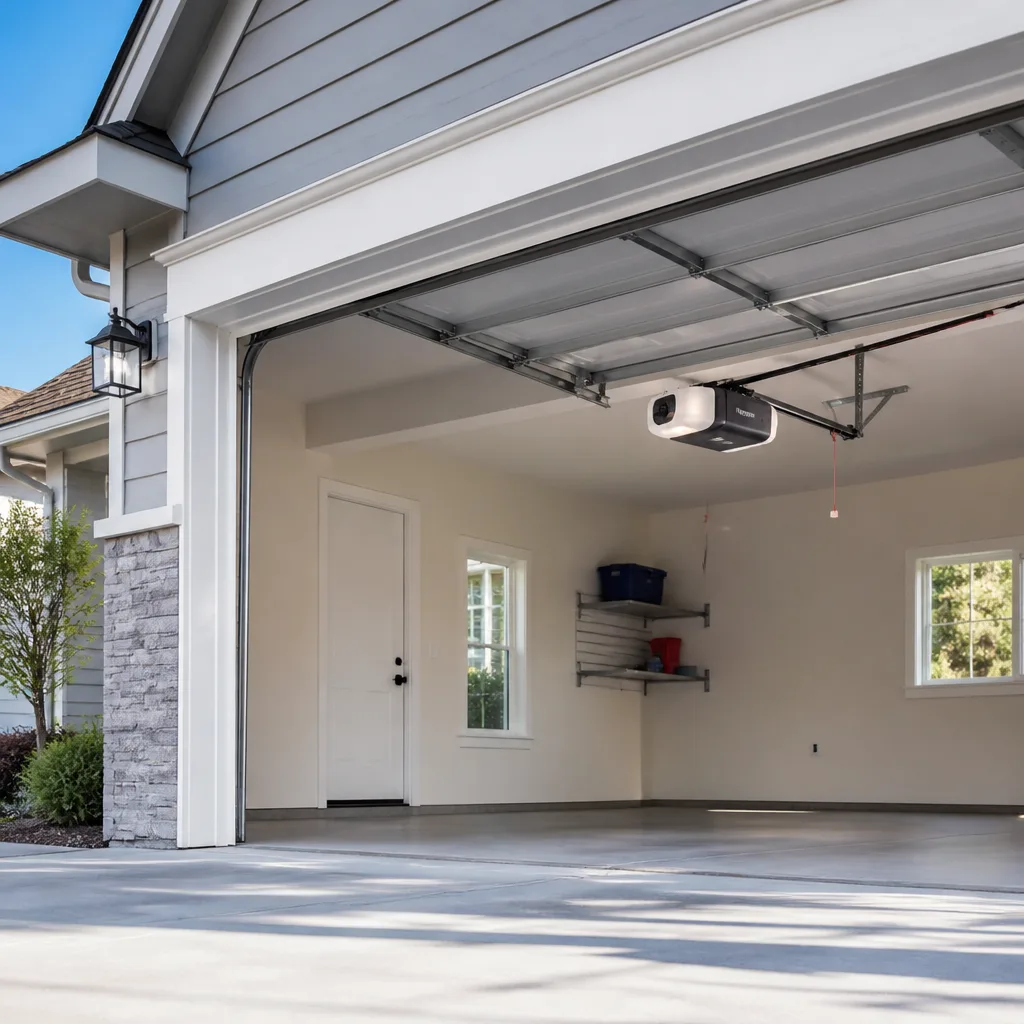 LiftMaster openers
 Chamberlain openers
Full 25-point door and opener safety check with every visit - springs, cables, rollers, tracks, and your LiftMaster or Chamberlain opener included
You get a price before we start. It does not change when the pro arrives.
Get your free estimateGarage Door Warning Signs: A Charlestown Homeowner’s Reference Guide
A torsion spring doesn’t snap without warning. It telegraphs the failure through weeks of slower open cycles, a slight door lean, and a grinding tone that most homeowners chalk up to “just how it sounds.” The warning was there; nobody knew what to listen for. That’s the real problem with garage door failure – it’s rarely sudden, it’s rarely invisible, and it’s almost always preceded by weeks of signals that go unread. This reference guide teaches Charlestown homeowners to read their door the way a technician does: what each sound means, what a 60-second visual check reveals, and which warnings mean stop using the door right now.
Quick Answer
The most common garage door warning signs are unusual sounds (grinding, popping, scraping), visible door lean or sag, uneven gaps at the bottom seal, fraying cables, and jerky or reversing movement. In Charlestown, where many homes have older single-car garages with tight clearances, an inconsistent or intermittent problem is often more urgent than a steady one – because intermittent behavior signals a worn part close to full failure. Any door that reverses, won’t stay down, or leans should be taken out of service until a technician inspects it.
Styles & brands we work with
- Raised-panel steel
- Carriage house
- Modern flush
- Full-view glass
- LiftMaster openers
- Chamberlain openers
Table of Contents
- What Your Door’s Sounds Are Telling You
- The 60-Second Visual Check
- How Urgent Is It? A Response Time Guide
- Why Intermittent Problems Are Often More Urgent
- Charlestown Weather and Garage Door Wear
- How to Describe a Symptom Accurately
- Springs and Cables: The Signs You Must Not Ignore
- Warning Signs That Mean Replace, Not Repair
What Your Door’s Sounds Are Telling You
Sound is the first diagnostic tool every technician uses. The difference between a healthy door and a failing one is often a single tone layered underneath the normal motor hum. Most homeowners hear the layer and dismiss it. Here’s how to tell the sounds apart.
Grinding. A low grinding or rumbling sound during travel almost always points to worn rollers. Rollers are the small wheels that carry the door along the track, and over time the bearings lose grease and the nylon or steel surface wears unevenly. Grinding usually worsens gradually and often accompanied by a slight vibration you can feel through the floor or the wall behind the door. Left alone, worn rollers can drag and stress the opener motor.
Popping or a sharp snap. A pop during operation is a warning about spring stress. Torsion springs carry enormous tension, and when a coil begins to bind or develop a fatigue crack, the sound is distinct – a single sharp pop rather than a continuous grind. A popping spring can hold for weeks before it fails, but it should never be ignored. Springs are the highest-risk component in any garage door system, which is why we treat spring diagnostics as its own dedicated service.
Scraping. Scraping or a metallic dragging sound usually means the door is rubbing against the track, which points to track misalignment. Tracks bend with age, from a bumped car, or from a shifting garage frame. A door rubbing a track is being forced off its intended path, and continued use accelerates wear on both the rollers and the panels.
A tone that has simply changed. Don’t wait for a name for the sound. If your door sounded one way last month and sounds different today, that change is the diagnostic signal. Note when it happens – on opening, on closing, or at a specific point in travel – and tell the technician exactly that.
The 60-Second Visual Check
You don’t need a ladder, a tool, or any mechanical knowledge to catch most early warning signs. A minute of walking around the door while it is at rest will reveal more than you’d expect. Do this check once a month – it’s the single highest-value habit a homeowner can build.
- Check the gap at the bottom. With the door fully closed, stand inside and look at the bottom seal. It should make even contact with the floor across the full width. A visible gap on one side means the door is out of balance or the seal is worn.
- Look at the door edges for symmetry. The gap between the door and each vertical track should be visually equal left and right. If one side has a wider gap, the door has shifted and is likely traveling unevenly.
- Inspect the cables. Look at the two cables that run along the sides. They should lie in clean, even coils with no fraying, birdcaging, or loose strands. Any frayed cable is a stop-using-now condition.
- Eyeball the springs. Above the door, the torsion spring (a horizontal coil) should look intact, with a tight, even coil. A visible gap in the coil is a broken spring. Never reach up to touch it.
- Run the door and watch it travel. From a safe distance, watch for jerking, a lean, or a door that stops short. Run it one full cycle in each direction.
- Run the safety reversal test. With the door open, place a small object in its path and close the door. A properly set opener reverses on contact. If it doesn’t, stop and call for a technician.
None of these checks requires you to adjust anything. The point is to spot deviations early and describe them accurately – which is where a trained eye saves you money.
How Urgent Is It? A Response Time Guide
Not every warning sign requires the same speed of response. Some can wait for a scheduled visit this week. Others mean the door comes out of service now. Here’s the split.
Stop using the door immediately – call now:
- You see a broken spring (a gap in the coil) or hear a loud bang from above the door.
- A cable is frayed, dangling, or visibly loose.
- The door leans noticeably or hangs at an angle when open.
- The door closes and then reverses or will not stay down.
- The door feels dangerously heavy when you lift it by hand (with the opener disconnected), or feels like it will fall.
- The door has come off one or both tracks.
Schedule a repair within the week:
- Persistent grinding or rumbling that’s new.
- A door that runs slower than it used to.
- A door that stops short of fully open or fully closed.
- The opener motor runs but the door doesn’t move, or moves with a delay.
- A visible gap at the bottom seal when closed.
- An opener remote that only works from close range.
The distinction matters for safety, not just for scheduling. When a spring or cable is involved, the correct move is to leave the door alone. Those parts are under extreme tension, and the failure mode when they let go is severe enough that we never recommend a homeowner touch them. A trained technician can take the tension off safely, which is not a job for a weekend project.
Why Intermittent Problems Are Often More Urgent
Here’s the counterintuitive part of garage door diagnosis: a problem that happens every single time is usually easier to diagnose and often less dangerous than one that happens once in a while.
A consistent symptom – a door that always grinds, always stops short – points to a part that has already worn to a known state. A technician can inspect it, identify the cause, and fix it. But an intermittent symptom is the signature of a part in the danger zone between “worn” and “broken.” Think of a roller that has lost most of its bearing but still catches now and then. Or a spring that has a fatigue crack that opens only under load on a cold morning. These parts behave unpredictably, which is precisely why they fail with less warning.
In our experience with Charlestown’s older garages, the intermittent complaints are the ones that turn into emergency calls: a door that works nine times out of ten, then drops the tenth. If your door behaves differently depending on temperature, time of day, or how often you’ve used it, that inconsistency is a signal – not evidence the problem is going away. The opposite, actually. Worn parts rarely heal themselves; they finish wearing out.
For that reason, we’d rather see an intermittent door inspected promptly than wait for it to fail on a schedule you pick. You’ll get in front of the breakdown instead of reacting to it. Garage door repair scheduled now is much smoother than a same-day emergency when the door won’t close.
Charlestown Weather and Garage Door Wear
Charlestown’s weather puts a specific kind of wear on garage doors – not the dramatic kind, the seasonal kind. Hot summer afternoons and cold winter mornings mean the metal of a door, track, and opener expands and contracts through a wide range every year. That cycle stresses every moving part. Springs, cables, hinges, and rollers all live through thousands of stretch-and-release cycles, and the change in temperature loosens what was once tight.
Winter creates its own set of problems. Cold thickens grease in the rollers and tracks, which can turn a mild grinding problem into a harder-to-move door. Ice at the threshold can put sideways pressure on the bottom seal and the vertical tracks. And a cold morning is when a fatigued spring is most likely to finally give way – the load is constant, but the metal is less forgiving.
Summer does its own version. Wooden garage door frames in older Charlestown homes can swell with humidity, shifting the track alignment a fraction and creating scraping that wasn’t there in spring. If you notice a door that scrapes only in July and August, that’s likely a frame-expansion issue, not a track that needs replacement.
Practically, this means a couple of seasonal habits pay for themselves: clear ice and salt from the threshold, and check the door’s balance once at the start of each season. If you’re hearing new sounds in either direction, treat the change as information. That’s when garage door opener repair is worth a diagnostic visit before a minor issue becomes an opener that needs replacing.
How to Describe a Symptom Accurately
Accurate symptom description shortens diagnosis time and often means the technician arrives with the right part. It’s the homeowner’s best contribution to a fast repair. Here’s a simple framework:
- When does it happen? On opening, on closing, or both? At the very start, partway through travel, or at the very end?
- What does it sound like? Grinding, popping, scraping, humming without movement, or a sound you can only describe as “different.”
- How often? Every time, once in ten, or only in cold weather? Intermittent is useful information, not a reason to wait.
- What does it look like? Is there a lean, a gap at the bottom, a visible cable issue, a spring that looks wrong?
- What changed recently? Did the door get bumped, has anyone adjusted anything, has the opener been reprogrammed, or has a new remote been added?
Give the technician this picture over the phone and you’ll often get a rough sense of the problem before anyone arrives. That said, we treat every symptom as a starting point, not a verdict – diagnosis always begins with an inspection. If you’re not sure how to describe what you’re hearing, say so. “Something’s off on the left side” is still a useful clue when it’s paired with a door cycle the technician can watch. The point of the description is that it lets the job start with a hypothesis rather than building one from scratch.
Springs and Cables: The Signs You Must Not Ignore
Springs and cables are the two components where a warning sign means stop – not plan, not schedule, stop. They carry the full weight of the door under tension, and when they fail, the door drops. This is exactly the kind of work a trained professional needs to handle, and we take it seriously on every visit.
Spring warning signs:
- A visible gap in the torsion spring coil, or a spring that’s hanging loose.
- A loud bang from above the door, followed by a door that feels much heavier than usual.
- A door that opens a few inches and won’t go further.
- A popping sound at the start of travel that wasn’t there before.
- A cable-like sound you can’t place on one side only.
Cable warning signs:
- Visible fraying – loose strands sticking out of the coil.
- A cable that has come off its drum on the side of the door.
- A door that looks tilted or hangs lower on one side.
We won’t walk you through adjusting either one. The tension on a door spring is stored energy – it’s released instantly and violently when a part lets go, and the outcome is a serious injury as often as it’s a broken door. If any of the above applies, disconnect the opener (pull the release cord) so the door can’t be triggered remotely, keep the door fully closed if it’s down, and call. Our technicians have up to 12 years of experience reading doors like these, and we’ve handled them across every major brand – Genie, Clopay, Amarr, Wayne Dalton, and the rest. When the springs or cables are compromised, the safest call is to let someone trained take the tension off.
Warning Signs That Mean Replace, Not Repair
Most warning signs point to a repair. But some point to a door that’s reached the end of its service life, and putting money into another fix becomes a bad trade. Here’s when we’d start talking about a new door rather than another repair.
Consider replacement when:
- The door panels are sagging, rusted through, or separating at the seams.
- The same part has failed repeatedly – a door that’s been through multiple roller or hinge repairs.
- The door structure is bent or warped so the door no longer travels evenly.
- You’re facing a spring, cable, and panel repair on a door that’s older than the rest of your home’s trim.
- You’re repeatedly replacing opener parts on a unit that no longer matches the door’s weight and size.
Replacement is also sometimes the safer path. A door that has come off track multiple times is telling you the frame and the door no longer agree with each other, which is often a structural issue that adjusting the track won’t fully solve. That’s where a garage door installation becomes the better answer: a properly matched door and opener, measured for the opening, with a written price before anything is ordered. On new doors and replacements, the work is measured and scheduled rather than same-day – so it’s a planned job, not a rush.
New doors also let you match the system to the opener. Because we service lift systems across LiftMaster, Chamberlain, Genie, and Craftsman along with the major door manufacturers, we can put together a door-and-opener package that fits the space. For a Charlestown home with a tight single-car garage, getting the door weight and the opener capacity aligned is worth more than picking the door style first.
Common Mistakes to Avoid
Ignoring a sound because the door still works. A door that “still works” is the door most likely to fail at the worst moment. Working is not the same as sound. An intermittent problem is an intermittent warning.
Running the door after a cable or spring looks wrong. This is the most dangerous mistake on this list. The door can drop without warning, and the force behind it is not something a person can hold back. Stop the door and call.
Forcing a stuck door. If the door won’t move, pulling harder won’t fix the cause, and it can bend panels or damage the tracks permanently. A stuck door is a diagnostic job, not a strength contest.
Oiling or greasing the springs and cables. These need no lubrication and adding grease to the wrong surface can trap grit and accelerate wear. Track cleaning and roller lubrication is where a homeowner’s effort does the most good.
Replacing the opener to fix a door problem. A door that runs slow after a spring failure can look like an opener problem, so people replace the opener first. The spring is usually the real cause. Diagnosis before replacement saves money.
Adjusting the track yourself. A track adjustment made without understanding the door’s geometry can throw the door off level and damage the panels. Track work is a job for a technician with the right tools, and it’s quick once the right person is there.
Waiting until the failure on a cold morning. Springs tend to fail when the temperature drops, so the warning season is also the slow season for emergency calls. In Charlestown, if you hear a new pop in the fall, that’s your cue to get it looked at before winter arrives.
See the difference
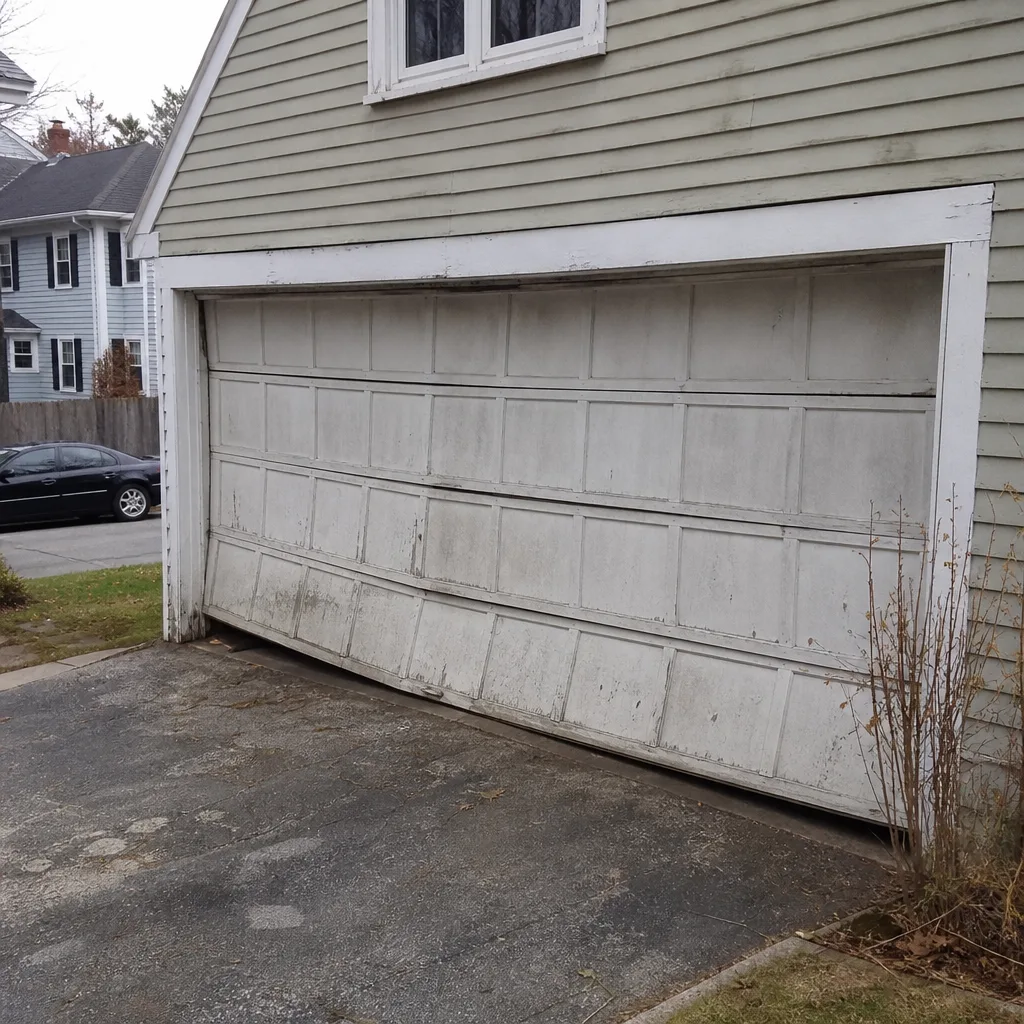
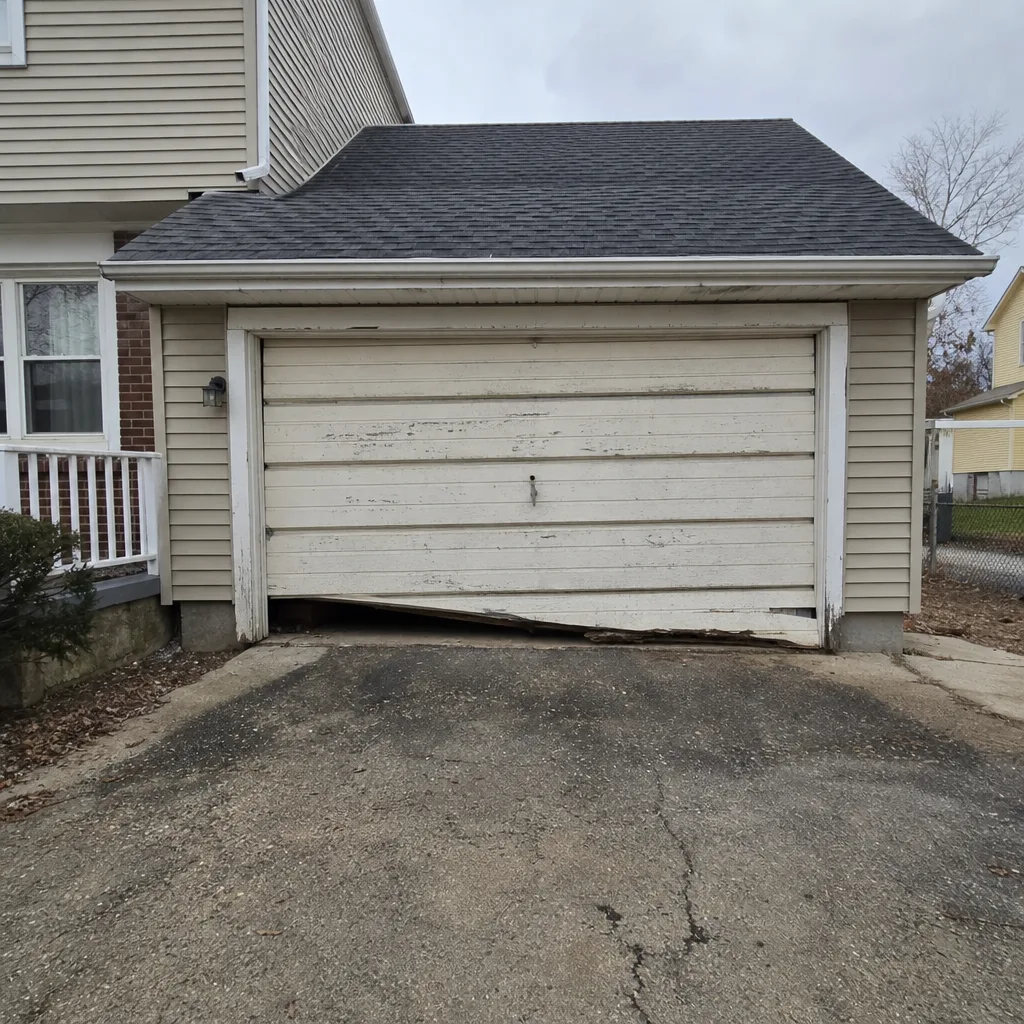 Before
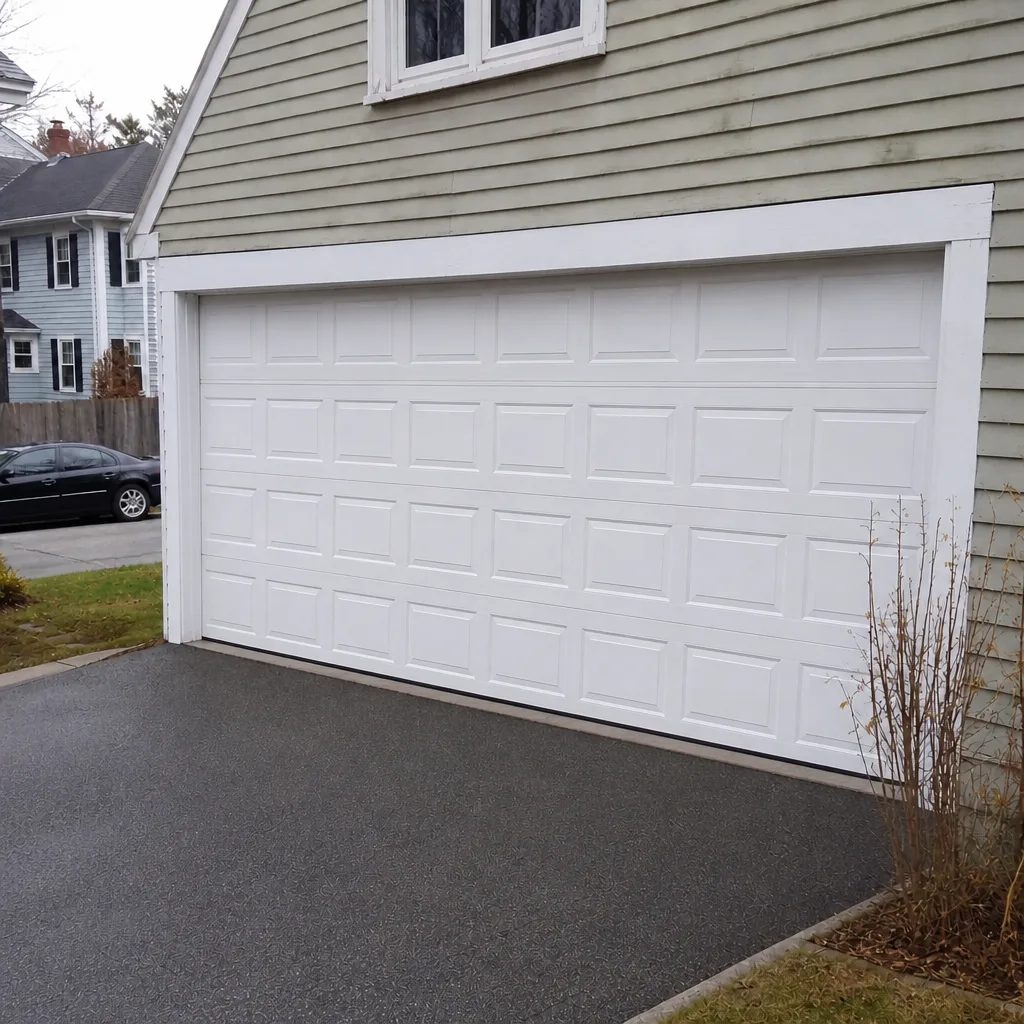
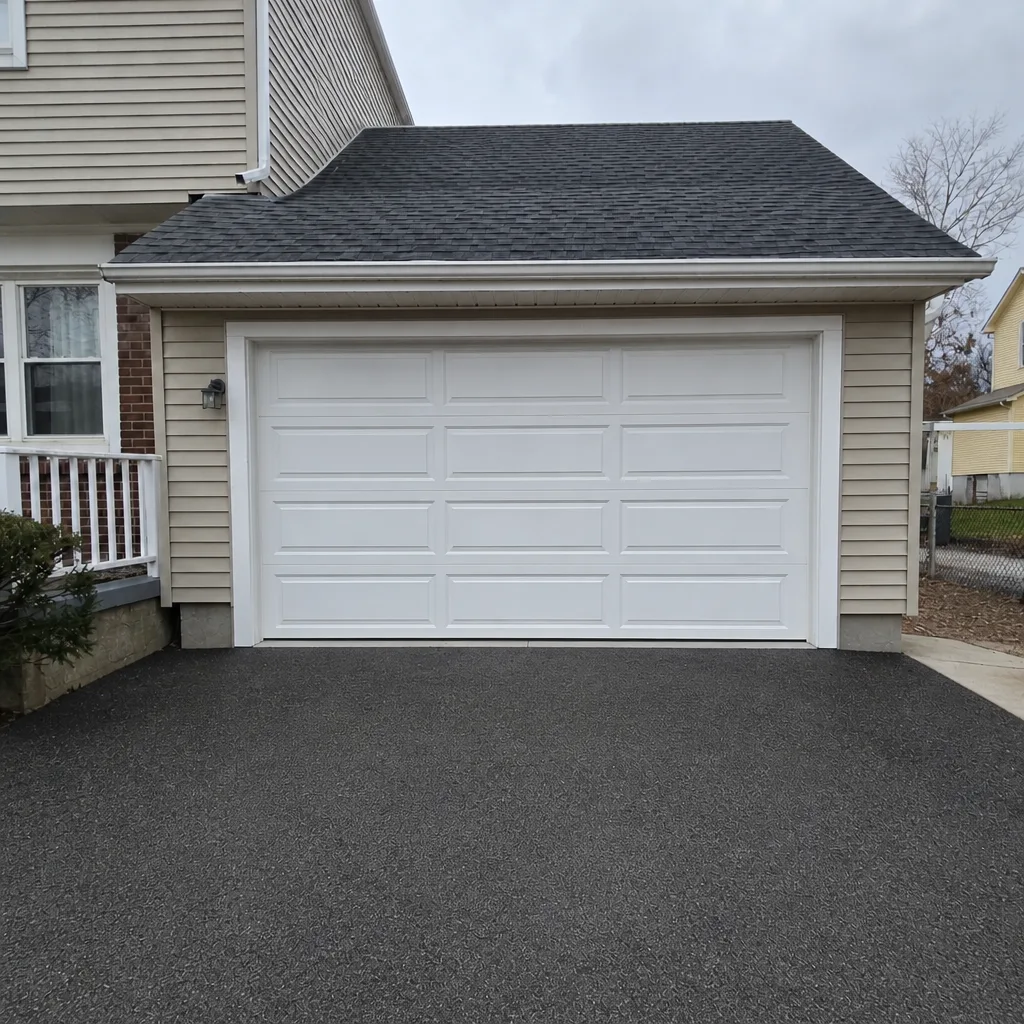 After
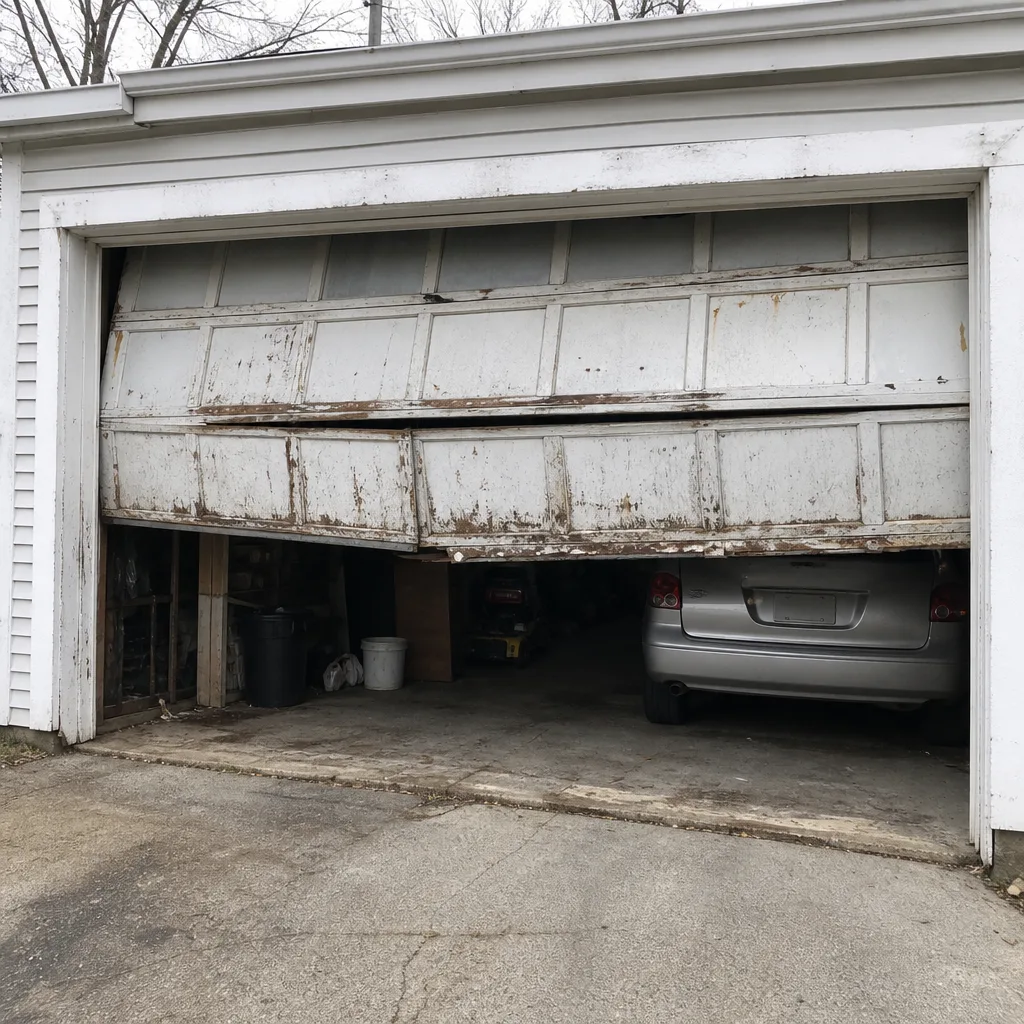 Before
 After
 Before
 After
When to Call a Professional
Call a technician when any of the stop-using conditions apply: a broken spring, a frayed or loose cable, a door that leans, reverses, or won’t stay down, or a door that’s come off its tracks. Call sooner rather than later when you hear a persistent grinding, popping, or scraping that wasn’t there before, or when the door behaves differently depending on the weather. And call when you’re not sure – describing what your door is doing is free, and it’s usually the fastest way to know whether the problem can wait. Charlestown Garage Door Repair offers free estimates in Charlestown – call (866) 401-6449. We work on your brand, whether it’s a door, an opener, a spring, or a part, and we quote every job before any work starts.
Frequently Asked Questions
The most common warning sign is a change in sound. A healthy door has a steady, even hum during travel; a failing door adds grinding, popping, or scraping on top of it. If your door sounds different than it did a month ago, that change is worth investigating – and it’s usually faster and cheaper to address before the door fails.
A spring about to fail often shows a visible change: a gap in the coil, a pop at the start of travel, or a door that suddenly feels heavy. Never reach up to test a spring by hand. If the door is heavy, won’t open fully, or a loud bang came from above it, stop using the door and call a technician – spring work is the highest-risk part of garage door repair, and we handle it as its own dedicated service.
Broken springs, frayed cables, a leaning door, a door that reverses, or a door that has come off its tracks are stop-using conditions – call today. Grinding sounds, a slower door, or a gap at the bottom seal can usually be scheduled within a week. When you’re not sure which side of that line your door is on, describe the symptom and we’ll help you decide. Call (866) 401-6449 for a free estimate.
Typical spring repairs in the Charlestown area run a few hundred dollars per spring, with a matched pair usually replaced together and priced at roughly twice a single spring. The written estimate sets the final price, and we quote before any work starts, so there are no surprises once the technician is on site. Call (866) 401-6449 for an exact quote – estimates are free.
You can often use it for a short time, but scraping usually means the door is rubbing the track, and continued use wears the rollers and panels faster. It’s a schedule-this-week warning, not a stop-using one, unless the door also leans, reverses, or comes off the track. When in doubt, keep the door closed and call.
We work across all the major brands installed in residential garages: LiftMaster, Chamberlain, Genie, Clopay, Amarr, Wayne Dalton, Craftsman, and Raynor. That covers both door manufacturers and opener drive systems, so one call covers almost any setup in Charlestown – repair, opener repair, spring repair, parts, or a full new door. Call (866) 401-6449 for a free estimate.
The Bottom Line
Garage doors don’t fail without warning – they fail after weeks or months of signals most homeowners don’t recognize. The fix is a small habit: listen to the door, watch it travel, and check the bottom seal and cables once a month. When you hear a change, treat the change as information, not background noise. An intermittent problem is often more urgent than a steady one, and a spring or cable issue means stop – not schedule. When the door starts telling you something, or you’d simply rather have a trained eye confirm it’s fine, Charlestown Garage Door Repair offers free estimates. Call (866) 401-6449 and we’ll help you read your door.
Written by the team at Charlestown Garage Door Repair.