Garage Door Repair: Repair or Replace? How Charlestown Homeowners Decide
If you’ve repaired the same garage door twice in 18 months, you’re not dealing with bad luck. You’re likely dealing with a door whose panels, springs, and hardware are no longer engineered to work together, and each repair is compensating for that mismatch. Most repair-or-replace advice focuses on price alone, which misses the real question: is this door still structurally sound enough for new parts to do their job? Here’s how we help Charlestown homeowners decide, using failure pattern instead of just dollar signs. If you’d rather have a trained eye look at it than climb the ladder yourself, call (866) 401-6449 for a free estimate.
Why Repeat Repairs Point to a Compatibility Problem
A garage door is a system, not a collection of parts. Panels, hinges, rollers, torsion springs, and the opener’s drive are all balanced to work against a specific door weight and geometry. When one component wears out, replacing it works. When several components are aging at different rates, each new part fights the rest of the door. That’s why a new spring on a warped door can fail early, or a new opener on a heavy, sagging door can strain from day one.
The clearest sign is a pattern: three repairs in two years, especially if they’re in different areas of the door (spring one time, panel another, opener another). That’s not bad luck. It’s a door where the underlying structure has drifted out of spec, and every repair is a short-term patch on a long-term mismatch. In our experience, homeowners who recognize this pattern early save themselves the frustration of a fourth repair call six months later.
There’s a second pattern worth watching: repairs that never quite fix the symptom. A door that still binds after new rollers, or an opener that still strains after a gear replacement, usually has a structural issue the part swap can’t address. That’s a strong signal to start weighing replacement seriously.
The Panel Integrity Test: Can Your Door Skin Still Hold the Hardware?
Repeated repairs stress the metal around hinges, brackets, and roller mounts. Even a well-maintained door can weaken at those attachment points over time. Before recommending another repair, we check whether the door skin itself can still carry the load the hardware needs. Here’s what that assessment looks like:
- Hinge and bracket mounting: Are the screw holes still tight, or are they enlarged or stripped? Oversized holes mean the panel can no longer grip the hardware securely.
- Dents and creases near the edges: A crease along a panel edge weakens the whole panel’s ability to hold shape under load.
- Rust and metal thinning: Thin sections around fasteners won’t hold torque, even with new hardware.
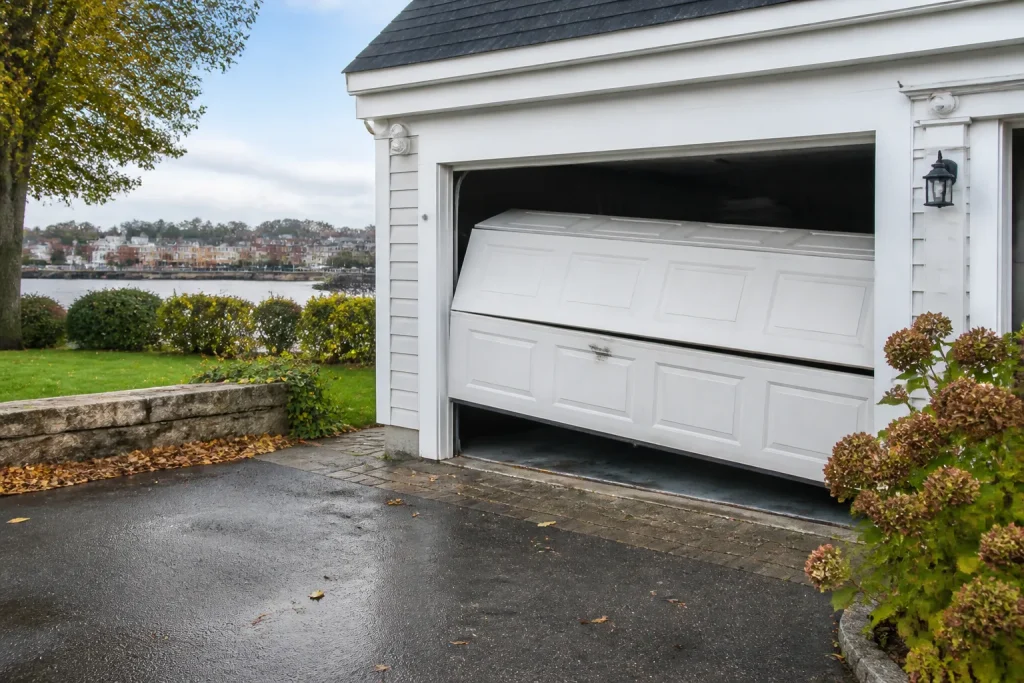
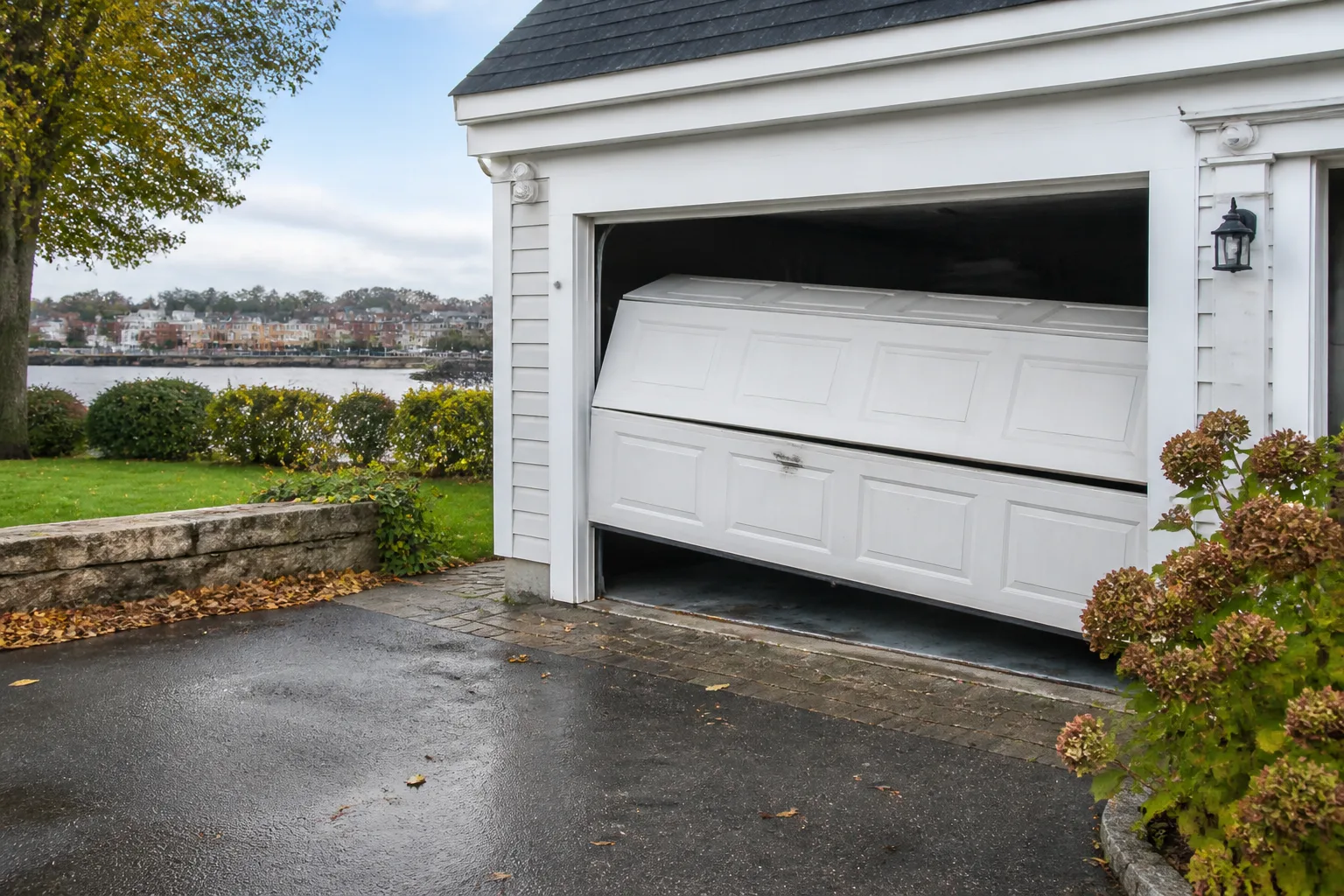
- Panel separation: Visible gaps between panels or a wavy door suggests the sections have flexed past their design limits.
- Track alignment: If the door has popped its rollers or scraped the track repeatedly, the panel edges may be damaged beyond what hardware replacement can fix.
If more than a couple of these signs are present, replacing hardware alone won’t hold. The door needs to be re-skinned or replaced. This is the single biggest predictor of whether a repair is money well spent, and it’s the check most homeowners never get told to make.
True Cost of Ownership: The Energy and Sealing Math
Simple repair-versus-replace comparisons usually ignore the wear that doesn’t announce itself. Aging weatherstripping, bottom seals, and side retainer strips let air and moisture past the door every day. That’s heat loss in winter, conditioned air loss in summer, and gradual water intrusion at the threshold. None of it shows up in a repair quote, but it’s part of what you’re actually paying for either way.
- Bottom seal: Cracked or compressed seals let air and pests in, and a failing seal often signals the door isn’t sitting flush.
- Side and top weatherstripping: Worn strips admit drafts that make the garage uncomfortable and drive up energy use in the adjacent rooms.
- Panel fit: Warped panels don’t seal tightly even with fresh weatherstripping, so the leak persists until the door is replaced.
- Cheap repairs that mask wear: Hardware swaps can make a door feel better without fixing the sealing problem underneath.
Add these up across a few years and the “cheaper” repair path often costs more than a properly sealed replacement, especially on an older door. In Charlestown, where many garages are attached or under the main living space, that sealing gap matters more than it would on a detached outbuilding.
What Charlestown’s Housing Stock Means for the Decision
Charlestown has a lot of pre-war construction, and that changes the repair-or-replace calculus. A lot of these garages were built with non-standard opening sizes, which means a full door replacement often involves more than dropping in a new door. Custom or trimmed-to-fit panels are sometimes needed. Sometimes the opening’s header or framing needs work before a new door can be hung. That’s not a reason to avoid replacement, but it is a reason to plan for it as a project rather than a quick swap.
On the other hand, a solid older door with standard hardware is often an excellent repair candidate, because the structural bones are sound and the parts are widely available. We work with the major door manufacturers, including Clopay, Amarr, and Wayne Dalton, plus openers from Genie and others, so brand is rarely the obstacle. A lot of Charlestown garages turn out to need a targeted fix, not a full rebuild. The only way to know is to measure the opening and inspect the framing, which is why we insist on seeing the door in person before quoting either path.
The Spring-to-Door-Age Ratio
Springs are the most mechanically dangerous part of any garage door, and they’re also the most common failure. Here’s the rule of thumb we use: replacing springs on a 20-year-old door whose panels, tracks, and framing are still straight is often money well spent. Those springs will outlast the rest of the door’s useful life, and the repair is straightforward. Replacing springs on a warped, dented, or out-of-alignment door typically isn’t, because the imbalance that wore the old springs out is still there and will wear the new ones out faster.
We never recommend a homeowner touch torsion springs. They store enough energy to cause serious injury, and the winding process requires specific tools and training. This is a job for a trained technician, full stop. Your part in the process is noticing the symptoms (a loud bang, a door that won’t lift, a gap above one side) and calling before the door gets forced open or closed. Our technicians have up to 12 years of experience with springs and the full range of door and opener systems, and we handle the risk so you don’t have to.
Partial Replacement vs. Full New Door
Replacement isn’t all-or-nothing. Some jobs genuinely qualify for a partial fix, and a good technician will tell you which camp you’re in. Full replacement is the right call when the panels are structurally compromised, the opening size requires it, or multiple components are failing at once. Partial replacement covers the cases where just part of the system is shot:
- Panels only: One or two damaged sections, with straight tracks, sound hardware, and a functional opener. Sections can often be ordered to match the existing door, including through Clopay, Amarr, and Wayne Dalton lines.
- Hardware only: Sound panels but worn rollers, hinges, and bearings. A hardware refresh can restore smooth operation cheaply.
- Opener only: A dead opener on a healthy door is a straightforward opener replacement, whether the old unit was a Genie, a LiftMaster, or another brand.
- Springs only: Sound door, failed spring, nothing else wrong. This is the cleanest repair case there is.
Full replacement makes more sense when two or more of these areas are failing together, or when the panel integrity test flags structural weakness. A new door also means a fresh warranty on the whole system, matched hardware, and new sealing, which is often the deciding factor for a homeowner who’s tired of patching.
When to Call a Pro
If you’ve had the same door repaired twice in 18 months, if the door no longer seals evenly, or if it binds, jerks, or stalls on its way up, it’s time to have it assessed properly. Springs and cables are genuinely dangerous to touch, and a door that’s out of balance can fail suddenly. Call a trained technician rather than trying to adjust it yourself.
Related services in Charlestown: For same-day safety issues, our garage door repair team can diagnose springs, cables, and tracks. For drive and control problems, see garage door opener repair. And if the decision lands on replacement, garage door installation covers measuring, ordering, and fitting a new door to your opening. Everything starts at Charlestown Garage Door Repair, and you can always call (866) 401-6449 to talk it through.
The Bottom Line
Repair-versus-replace isn’t really a price question. It’s a structural one. If your door has a single failure, repair it. If the failures keep coming from different components, the door is telling you its parts are no longer engineered to work together, and replacement solves that permanently. Add in the energy cost of aging seals and the structural realities of Charlestown’s older garages, and the decision gets clearer. Our rule of thumb: repair a sound door, replace a warped one, and never second-guess replacement when the panel integrity check fails.
We work on the door, the opener, and the springs as one system, across the major brands homeowners actually own. If you’re in Charlestown and need help deciding, Charlestown Garage Door Repair offers free estimates – call (866) 401-6449. The price gets quoted and agreed before any work starts, so there are no surprises at the end.
Frequently Asked Questions
Repair if the door has had one or two isolated failures and the panels are still structurally sound. Replace if the same door has needed three repairs in two years, if the panels are warped or the mounting points are stripped, or if the door no longer seals properly. The deciding factor is failure pattern, not just cost. Call (866) 401-6449 for a free assessment.
Cost depends on the part and the door. Spring repair, opener repair, and hardware replacement each sit in their own range, and custom openings in older Charlestown garages can push the number higher. We give a written estimate before any work starts, and that quote sets the final price. Call (866) 401-6449 for exact pricing on your door.
Yes, if the tracks, hardware, and framing are sound and the panel damage is limited to one or two sections. Sections can usually be matched to your existing door through Clopay, Amarr, or Wayne Dalton lines. If more than one system is failing at once, a full replacement is usually the wiser spend. We’ll tell you which applies when we see the door.
No. Torsion springs store enough energy to cause serious injury, and the winding process requires specific tools and training. This is a job for a trained technician. If a spring has snapped, keep the door closed and call (866) 401-6449 rather than trying to force it open.
Very likely. We service door and opener systems from LiftMaster, Chamberlain, Genie, Clopay, Amarr, Wayne Dalton, Craftsman, and Raynor, so most Charlestown homes are covered by one call. Our technicians have up to 12 years of experience across these systems, and we can source parts directly to cut the wait time. Call (866) 401-6449 to confirm your setup.
Written by the team at Charlestown Garage Door Repair.
Need Garage Door Help?
Call Charlestown Garage Door Repair - the local pro we connect you with is licensed and insured, here with fast after-hours help in Charlestown.
(866) 401-6449